Introduction
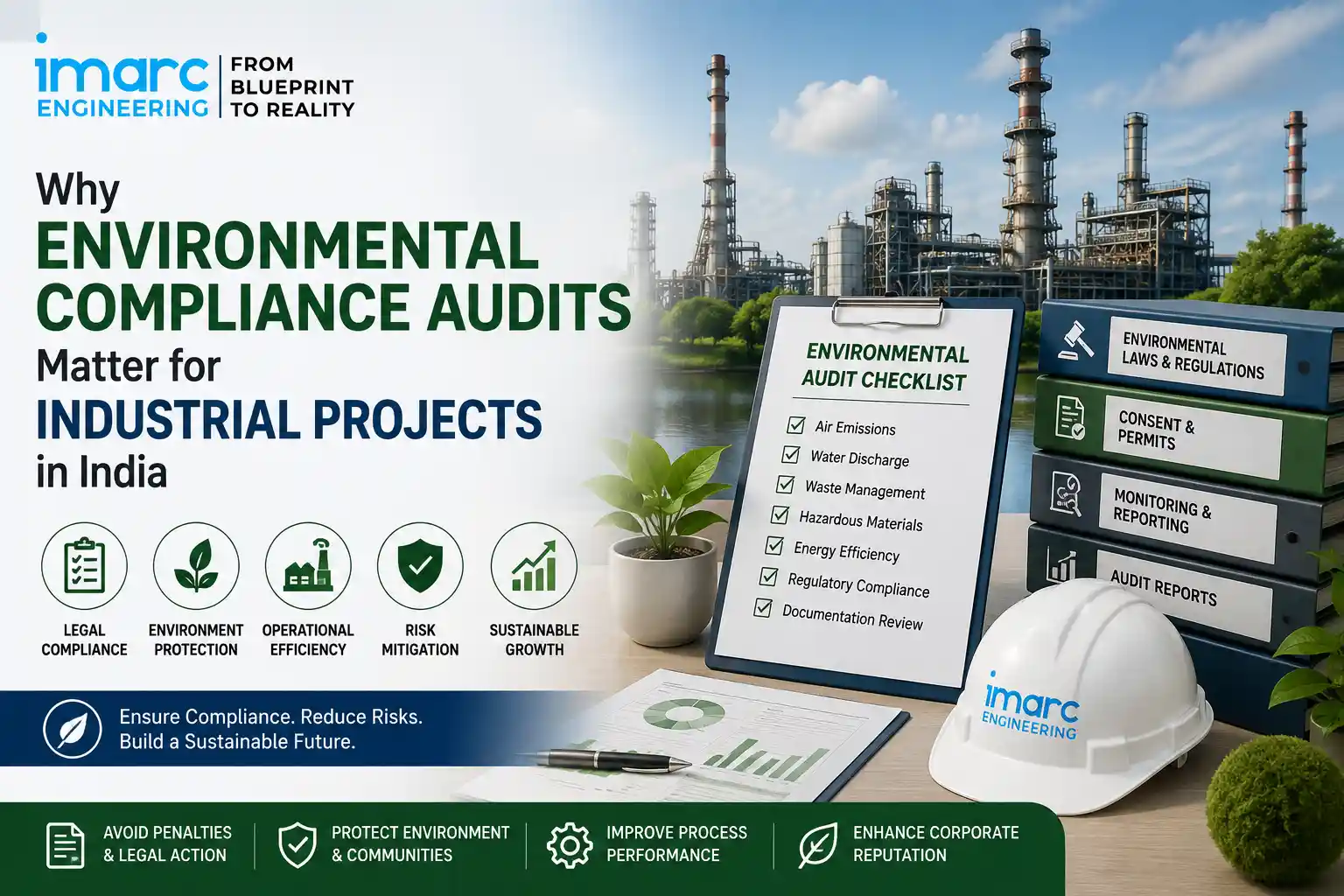
Environmental compliance audits help industrial projects identify gaps between regulatory requirements and actual plant operations before those gaps become notices, delays, retrofit costs or operational disruption. They examine consent conditions, pollution-control performance, monitoring records, waste management and the systems used to maintain ongoing compliance.
When environmental compliance is checked only after a notice, complaint or financing review, the plant is already under pressure. Planned and recurring audits can identify gaps in Consent to Establish (CTE), Consent to Operate (CTO), effluent systems, emissions controls, hazardous waste handling and compliance records early enough for corrective action.
IMARC Engineering supports industrial projects with regulatory readiness, operational compliance advisory and project planning across India. This article explains why environmental compliance audits matter for industrial projects in India, what they should cover and how structured audits protect both continuity and investment outcomes.
Planning an environmental compliance audit or industrial expansion? Contact IMARC Engineering for compliance readiness and project advisory support across India: https://www.imarcengineering.com/contact?service=environmental-compliance-audits
Why Environmental Compliance Audits Matter More for Indian Industry
India’s manufacturing and industrial investment cycle continues to expand under policy support and capacity creation.
- Manufacturing growth is estimated at around 7% at constant prices in FY 2025-26 (MoSPI First Advance Estimates).
- FDI into manufacturing rose 18% in FY 2024-25 to US$19.04 billion (Ministry of Commerce & Industry / DPIIT).
- PLI cumulative investment has exceeded ₹2.16 lakh crore, with cumulative production/sales above ₹20.41 lakh crore as of December 2025 (PIB).
- Logistics costs have improved to an estimated 7.97% of GDP (DPIIT-NCAER study).
As more greenfield plants, brownfield expansions and process changes move into operation, environmental obligations under state pollution control frameworks, consent conditions and sector rules become part of project competitiveness. Lenders, customers and internal boards increasingly expect evidence of control — not only a file of historical approvals.
What an Environmental Compliance Audit Actually Examines
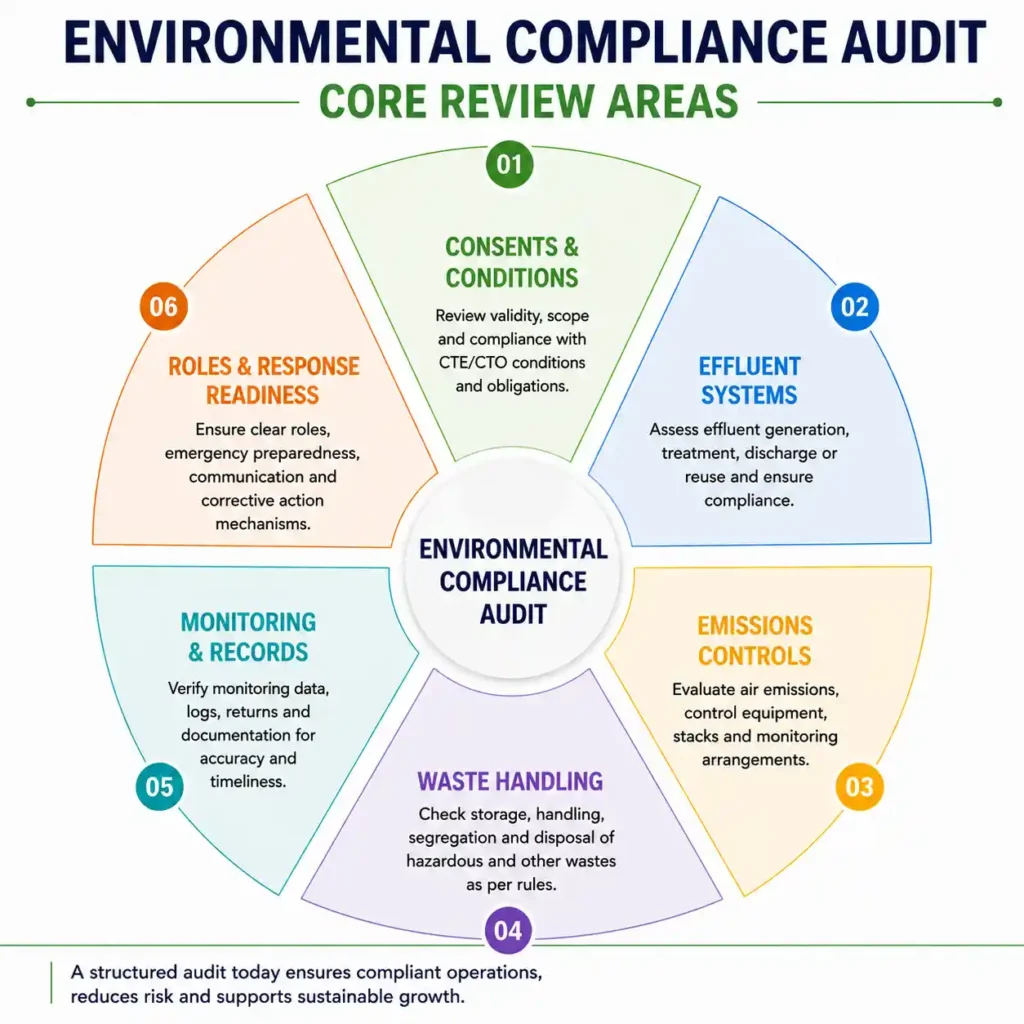
An environmental compliance audit is a structured review of whether a plant’s actual operations, pollution-control systems and records match applicable consent conditions and environmental obligations. In practical terms, it checks whether the plant is operating as approved, completing required monitoring, maintaining compliance records and addressing identified deviations.
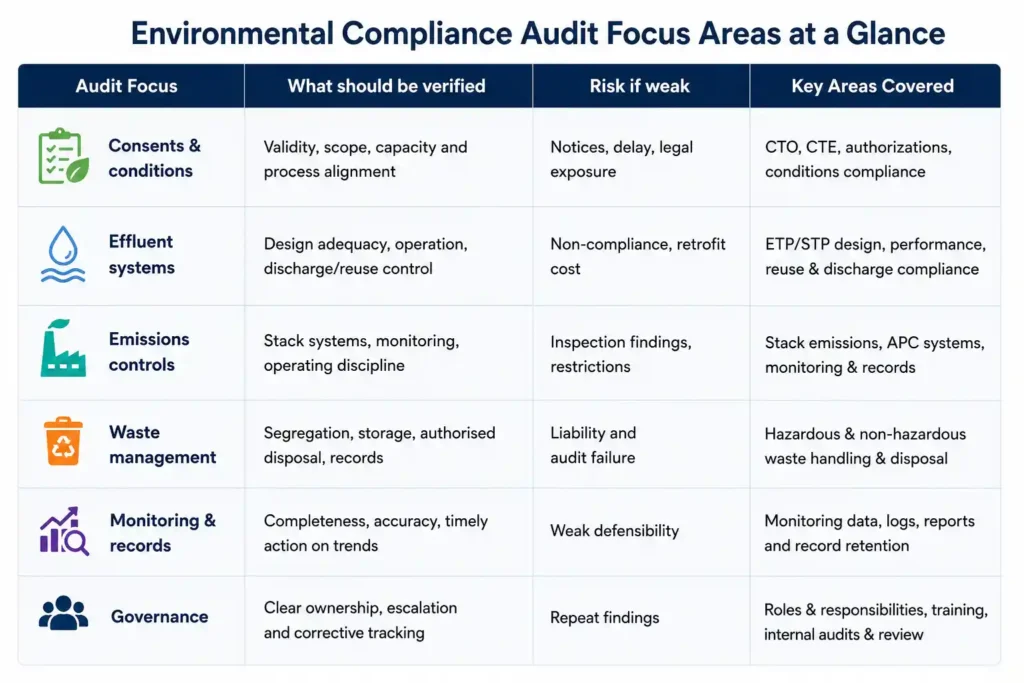
It typically assesses:
- Validity, scope and conditions of Consent to Establish (CTE) and Consent to Operate (CTO)
- Effluent generation, treatment, discharge or reuse practices
- Air emissions controls, stacks and monitoring arrangements where applicable
- Hazardous and other waste storage, handling and disposal pathways
- Water balance, consumption and conservation controls
- Housekeeping, spill control and contingency preparedness
- Records, returns, monitoring data and internal responsibility for compliance
The purpose is not simply to verify paperwork. It is to verify whether the plant can demonstrate lawful and controlled environmental performance in practice.
Why Environmental Compliance Audits Matter for Industrial Projects
1. Consent conditions must match the live plant
Capacity, product mix, fuel and pollution-control systems often change after original approvals. Audits reveal mismatches before they become inspection findings.
2. Project expansion and financing depend on clean compliance status
Brownfield expansion, refinancing and customer onboarding frequently require current environmental standing. Unresolved gaps delay commercial milestones.
3. Pollution-control systems can look complete and still underperform
ETP, stacks or waste areas may exist, but operating discipline, maintenance and monitoring may not meet consent expectations. Audits test performance, not only installation.
4. Documentation quality decides defensibility
Missing returns, incomplete logs or inconsistent monitoring data weaken the plant’s position even when hardware is adequate.
5. Early discovery is cheaper than forced correction
Identifying treatment-capacity gaps, storage deficiencies or documentation issues during a planned audit gives management time to budget and implement corrective actions before they affect production, commissioning or expansion.
6. Leadership gets a real risk picture
Audits convert scattered operational issues into prioritised actions that management can fund and track.
Where Industrial Projects Commonly Fail Environmental Reviews
Common weak points include:
- CTE/CTO conditions not reviewed or updated after process or capacity changes
- Effluent treatment operated inconsistently or beyond design assumptions
- Monitoring data incomplete, delayed or not linked to corrective action
- Hazardous waste storage without adequate segregation, labelling or disposal records
- Weak ownership between operations, utilities and EHS teams
- Expansion projects advanced without checking consent implications
- Temporary bypasses or workarounds normalised during production pressure
These gaps are often known informally on the shop floor but remain unresolved because ownership and corrective priorities are unclear. A structured environmental compliance audit converts these issues into documented findings, responsible actions and defined closure priorities before external scrutiny does.
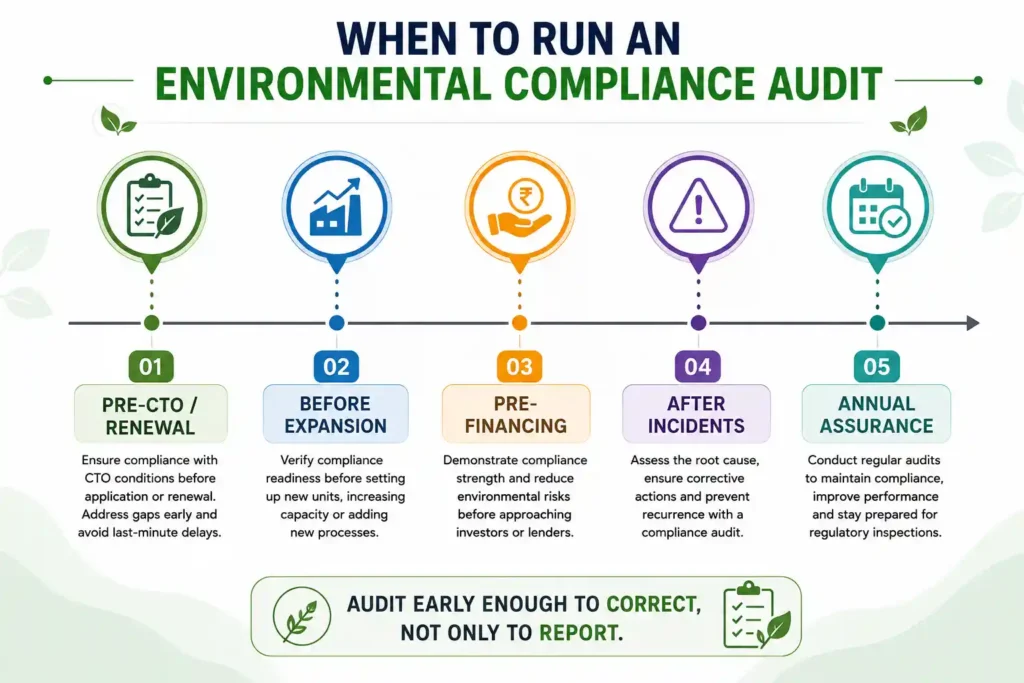
When Environmental Compliance Audits Deliver the Most Value
Audits are especially valuable:
- Before Consent to Operate applications or renewals
- Before major capacity expansion or product-mix changes
- Before acquisition, due diligence or brownfield investment decisions
- During pre-financing or investor technical reviews
- After process incidents, complaints or repeated internal deviations
- As part of annual compliance assurance for multi-plant organisations
- Before customer, ESG or supply-chain assessments that include environmental criteria
Timing matters. An audit conducted with enough runway to close findings protects both compliance status and production continuity.
Environmental Compliance Audit Focus Areas at a Glance
How IMARC Engineering Supports Environmental Compliance Readiness
IMARC Engineering provides Environmental Compliance Audit Services and regulatory readiness support for industrial projects and operating plants across India. The work focuses on identifying compliance gaps early, reviewing alignment with applicable consent conditions and documentation requirements, and helping project teams prioritise corrective actions before issues affect continuity, expansion or investment decisions.
- Review inputs on consent alignment, operating gaps and documentation readiness
- Support for plants preparing for expansion, commissioning or compliance reviews
- Integration of environmental readiness into project planning and operational discipline
- Advisory across pharmaceuticals, food and beverage, chemicals, auto components, electronics, FMCG and discrete manufacturing
Common Mistakes Companies Make on Environmental Audits
- Treating audits as a one-time event before inspections only
- Focusing on files while ignoring operating practice
- Leaving findings open without owners, budgets and deadlines
- Assuming original consents remain valid after major process changes
- Separating environmental compliance from production and utility management
- Starting corrective action only after external pressure appears
Conclusion
Environmental compliance audits are a practical risk-control tool for industrial projects in India. Lawful operation, expansion readiness and investment confidence depend on more than installed pollution-control equipment; they also require consent alignment, operating discipline, reliable monitoring and timely corrective action.
In a manufacturing economy supported by PLI investment, rising FDI and continued capacity creation, plants that audit environmental compliance with seriousness protect continuity and reputation. Plants that rely on reactive responses often pay through delay, retrofit cost and management distraction.
Through compliance readiness and project-aligned advisory, IMARC Engineering helps industrial businesses treat environmental audits as a control system for project and operating risk — not as a last-minute defence file.
Contact Us:
IMARC Engineering
Phone: +91-120-433-0800
Email: sales@imarcengineering.com
India: C-130, Sector 2, Noida, Uttar Pradesh 201301
LinkedIn: https://www.linkedin.com/showcase/imarc-engineering/
About the Author