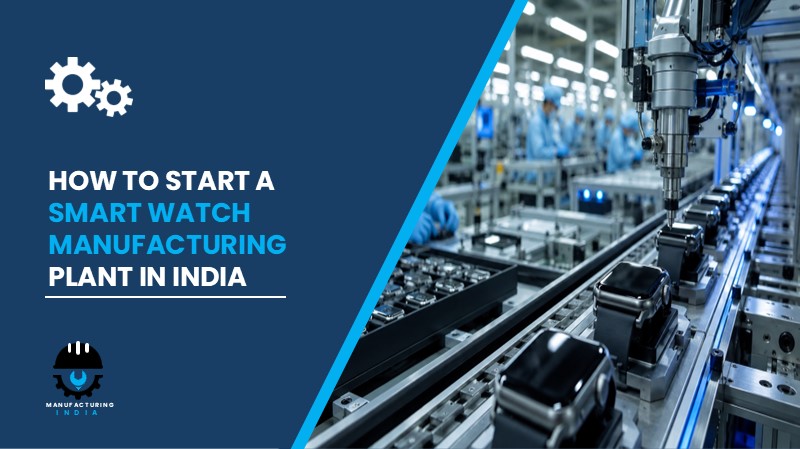
Setting up a smart watch manufacturing plant in India presents a compelling investment case backed by robust demand across consumer electronics, fitness and wellness, healthcare monitoring, sports and outdoor activities, and enterprise workforce solutions. The global market was valued at USD 62.3 Billion in 2025 and is projected to reach USD 252.80 Billion by 2034, registering a CAGR of 16.3% from 2026 to 2034. This growth momentum, driven by rising health awareness, growing adoption of wearable technology, increasing smartphone penetration, and demand for connected fitness and lifestyle devices, creates a powerful long-term demand environment for domestic producers.
India’s structural advantages – rapid urbanisation, expanding digital infrastructure, a growing middle class, and the central government’s Make in India initiative — make it a strategically sound base for wearable electronics production. States such as Maharashtra, Tamil Nadu, and Karnataka have established themselves as hubs for electronics manufacturing, offering reliable power, skilled technical workforces, and proximity to component supply chains. India’s cost-competitive environment, combined with growing domestic consumption and export potential, positions this investment as both timely and commercially viable.
Establishing a smart watch manufacturing plant in India combines strong policy tailwinds, a cost-competitive production base, and surging demand from fitness, healthcare, and consumer electronics sectors. With gross margins of 35–45% and net margins of 15–25% across plant capacities of 1–5 million units annually, this is a high-value investment with clear break-even viability and long-term sustainability.
What is a Smart Watch?
A smart watch is a wrist-mounted digital timepiece that integrates advanced technological functions into a compact wearable form. These devices combine multiple components — sensors, processors, displays, and connectivity modules — to deliver fitness tracking and activity monitoring, heart rate and sleep tracking, GPS navigation, notification delivery, mobile payment processing, and app-based function access. The devices use Bluetooth and cellular connections to link with smartphones, enabling instantaneous data transfer.
The product comes in several variants including fitness-focused, lifestyle, rugged, and premium models. Rugged variants are particularly popular for outdoor and enterprise use cases. Key properties include a compact rechargeable design, customizable user interfaces, and the ability to function across sports, healthcare, and enterprise workflows throughout the day. The production method follows a multi-step PCB assembly process — integrating sensors, assembling displays and batteries, fitting casings and straps, installing firmware, testing, and packaging — making this a technology-intensive but highly scalable manufacturing operation. End-use industries served include consumer electronics, fitness and wellness, healthcare monitoring, sports and outdoor activities, and enterprise workforce solutions.
Cost of Setting Up a Smart Watch Manufacturing Plant in India
The total investment for this type of facility depends on production capacity, automation level, technology configuration, location, and regulatory compliance requirements. A structured financial plan covering both capital expenditure (CapEx) and operational expenditure (OpEx) is essential for determining investment viability and break-even timelines.
1. Capital Expenditure (CapEx)
Capital expenditure is the one-time investment required to bring the facility into operation, with machinery costs accounting for the largest share of total CapEx given the precision and technology-intensity of the assembly process.
Land and Site Development costs cover land acquisition, boundary development, and registration charges. Investors should evaluate locations within a Special Economic Zone (SEZ) or an established electronics manufacturing cluster to benefit from fiscal incentives, streamlined approvals, and shared infrastructure.
Civil Works and Construction include the production shed, raw material and finished goods storage, quality control laboratory, clean room spaces for sensitive assembly, and the administrative block.
Machinery and Equipment: Key machinery required includes:
- SMT (Surface Mount Technology) lines
- Soldering systems
- Testing benches
- Firmware flashing tools
- Assembly stations
- Packaging equipment
Other Capital Costs include an Effluent Treatment Plant (ETP), pre-operative expenses, commissioning costs, and import duties on technology-specific equipment.
Request a Sample Report for In-Depth Market Insights: https://www.imarcgroup.com/smart-watch-manufacturing-plant-project-report/requestsample
2. Operational Expenditure (OpEx)
Raw Material Cost is the dominant component of the OpEx structure, accounting for approximately 70–80% of total operating expenses. Core raw materials include display (OLED), processor, sensors, battery, housing, and straps. Display (OLED) components drive the largest share of input costs, making long-term supplier contracts essential to stabilise pricing and ensure supply continuity.
Utility Cost covers electricity, water, and energy, representing approximately 5–10% of total OpEx. SMT lines and soldering systems are energy-intensive and benefit from power management integration. Other Operating Costs include transportation, packaging, salaries and wages, equipment maintenance, depreciation, and applicable taxes. By the fifth year, total operational costs are projected to increase substantially due to inflation, market fluctuations, supply chain disruptions, and rising consumer demand.
3. Plant Capacity
The proposed manufacturing facility is designed with an annual production capacity of 1–5 million units, enabling economies of scale while maintaining operational flexibility. Capacity can be customised per investor requirements, and profitability improves significantly with higher capacity utilisation, making ramp-up planning a critical element of the feasibility strategy.
4. Profit Margins and Financial Projections
The project demonstrates healthy profitability under normal operating conditions. Gross margins range between 35–45%, supported by stable demand and the value-added nature of connected wearable devices. Net margins range between 15–25%, reflecting the efficient cost structure achievable at optimal utilisation. Financial analysis covers net present value (NPV), internal rate of return (IRR), payback period, profit and loss projections, and sensitivity analysis — enabling investors to fully assess long-term viability.
Why Set Up a Smart Watch Plant in India?
Rising Demand for Wearable Technology. Growing health consciousness combined with increasing digital adoption is driving widespread wearable technology penetration across Indian consumers. The confluence of preventive healthcare awareness and fitness-oriented lifestyles is making wearable devices a mainstream product category, creating durable domestic demand.
Expanding Consumer Electronics Market. Data from the World Bank Global Findex Digital Connectivity Tracker 2025 showed that 86% of adults worldwide owned a mobile phone and 68% used smartphones. This widespread digital access supports adoption by expanding connected ecosystems and increasing consumer familiarity with app-based health and lifestyle technologies.
Technology-Driven Product Differentiation. Organisations can build competitive advantage through advanced sensor technologies, AI-powered analytics, and software development platforms. The ability to offer health monitoring, GPS navigation, and contactless payments within a single wearable supports strong value-added differentiation and premium pricing.
Cost-Competitive Manufacturing. India’s competitive land and construction costs, a large technically skilled workforce, and proximity to Southeast Asian component supply chains make it a cost-effective production base. Electronics manufacturing clusters in Tamil Nadu and Karnataka offer further cost efficiencies through shared infrastructure and logistics access.
Active Industry Investment. In January 2026, Titan launched the Titan Aira, integrating next-generation AI with 24×7 AI support and pricing between INR 6,999 and 7,999, targeting everyday wear across moods and lifestyles. In September 2025, Fastrack launched Fastrack MYND, an AI-powered wearable featuring a voice assistant, heart rate tracking, sleep analysis, fitness modes, and Bluetooth calling for AI-comfortable Indian youth. These launches signal strong domestic brand commitment to the category.
Local Supply Chain Preference. Consumer electronics, healthcare, and fitness companies are increasingly prioritising locally manufactured wearables to reduce import dependency and leverage government incentive programmes, creating a growing addressable market for Indian manufacturers.
Manufacturing Process – Step by Step
The smart watch manufacturing process uses PCB assembly as the primary production method, combining precision electronics work with software integration and rigorous quality assurance at each stage. Understanding this smart watch manufacturing process thoroughly is essential for equipment selection, clean room planning, and workforce training before commercial launch.
- PCB Assembly (SMT Line): Surface mount technology lines place and solder electronic components onto the printed circuit board, forming the functional core of the device.
- Sensor Integration: Sensors for health monitoring, GPS, and motion detection are integrated and calibrated to specification.
- Display and Battery Assembly: OLED display modules are mounted and connected, followed by battery installation with safety checks for capacity and leakage.
- Casing and Strap Fitting: Housing and straps are assembled onto the core unit with checks for dimensional accuracy and material integrity.
- Firmware Installation: Firmware is loaded using dedicated flashing tools, configuring the operating system, applications, and connectivity protocols.
- Quality Testing: Devices are tested across functionality, Bluetooth and cellular connectivity, GPS accuracy, sensor performance, and water resistance ratings.
- Packaging and Dispatch: Finished units are packed with accessories and dispatched to consumer electronics, fitness, healthcare, sports, and enterprise end-use channels.
Key Applications
The facility serves a wide spectrum of end-use industries, combining health monitoring, connectivity, and lifestyle functionality in a single wearable platform.
- Fitness and Wellness: Devices provide precise measurements for tracking physical activity, calorie consumption, heart rate, and sleep patterns throughout the day.
- Consumer Electronics and Lifestyle: Products enhance daily convenience by enabling notifications, phone calls, music playback, and application integration from the wrist.
- Healthcare Monitoring: Wearable devices enable preventive healthcare through continuous monitoring of vital signs and sharing of health data with providers.
- Sports and Outdoor Use: GPS-enabled models allow athletes and outdoor users to monitor performance metrics and navigate terrain during activities.
- Enterprise Workforce Solutions: Wearables support enterprise productivity through real-time communication, task management, and field-based workflow integration.
- Contactless Payments: NFC capabilities allow users to make mobile payments without a physical card or smartphone.
Leading Manufacturers
The global wearable technology industry is served by several multinational companies with extensive production capacities and diverse application portfolios. Key players in the smart watch manufacturing sector include:
- Apple Inc.
- The Samsung Group
- Garmin Ltd.
- Fitbit LLC
- Huawei Technologies
These companies serve end-use sectors spanning fitness, lifestyle, healthcare, and enterprise segments, setting the technology and quality benchmarks that domestic Indian manufacturers must align with.
Timeline to Start the Plant
Establishing a production facility in India typically requires 18–24 months from initial planning to commercial launch. Key phases include:
- Feasibility study and project report preparation
- Land acquisition and site development
- Regulatory approvals and environmental clearances
- Factory licence and fire safety compliance
- Machinery procurement and installation
- Raw material supplier agreements and supply chain setup
- Trial production and quality testing
- Commercial production launch
Licences and Regulatory Requirements
Starting a smart watch manufacturing unit in India requires several approvals across business, environmental, and safety domains:
- Business registration (Proprietorship, LLP, or Pvt Ltd)
- Factory Licence under the Factories Act
- Environmental Clearance from the State Pollution Control Board
- GST Registration
- Fire Safety NOC
- Hazardous/Chemical compliance (applicable to battery and soldering materials)
- Effluent Treatment Plant (ETP) operational clearance
- Occupational Health and Safety compliance
Key Challenges to Consider
High Capital Requirements. Establishing this type of plant with SMT lines, soldering systems, testing benches, firmware flashing tools, and clean assembly environments demands significant upfront investment, making structured project finance planning essential.
Raw Material Price Volatility. The cost of display (OLED), processor, sensors, battery, housing, and straps is subject to global supply chain fluctuations, particularly for semiconductor components. Long-term supplier contracts and diversified sourcing are essential risk mitigants.
Regulatory Compliance. Navigating factory licensing, environmental clearances, ETP operations, and import duty structures for technology components adds time and cost to project execution.
Technology and Innovation Pressure. The sector experiences rapid technology cycles driven by ongoing improvements in sensor technology, software development, and material design, requiring continuous R&D investment.
Competition from Global Players. Competing against Apple Inc., Samsung Group, Garmin Ltd., Fitbit LLC, and Huawei Technologies requires a clearly differentiated product strategy and efficient cost management.
Skilled Manpower. PCB assembly, firmware development, and quality testing require technically trained personnel, making talent acquisition and retention an ongoing operational priority.
Frequently Asked Questions
1. How much does it cost to set up a smart watch manufacturing plant in India?
The total investment depends on plant capacity (1–5 million units annually), technology selection, location, and automation level, covering land, civil works, machinery such as SMT lines and testing benches, and pre-operative expenses. A detailed project report provides site-specific cost estimates.
2. Is smart watch manufacturing profitable in India in 2026?
Yes. The unit demonstrates gross margins of 35–45% and net margins of 15–25%, supported by a market CAGR of 16.3% through 2034.
3. What machinery is required for a smart watch plant in India?
Essential equipment includes SMT lines, soldering systems, testing benches, firmware flashing tools, assembly stations, and packaging equipment.
4. What licences and approvals are required to start a smart watch plant in India?
Requirements include business registration, Factory Licence, Environmental Clearance, GST Registration, Fire Safety NOC, ETP clearance, and Occupational Health and Safety compliance.
5. What raw materials are needed for smart watch manufacturing?
Core inputs are display (OLED), processor, sensors, battery, housing, and straps, with display (OLED) driving the largest share of the 70–80% raw material OpEx component.
6. What are the environmental compliance requirements for a smart watch plant in India?
Manufacturers must obtain Environmental Clearance from the State Pollution Control Board, operate an approved ETP, and comply with hazardous materials regulations applicable to battery and soldering processes.
7. What is the best location to set up a smart watch plant in India?
Electronics manufacturing clusters in Tamil Nadu, Karnataka, and Maharashtra, as well as SEZ locations offering fiscal incentives and streamlined approvals, are well-suited for production.
8. What is the break-even period for this type of plant in India?
Break-even depends on capacity, capital investment, utilisation rate, and pricing. A full financial analysis with NPV, IRR, and payback period projections is available in the detailed project report.
9. What government incentives are available for manufacturers in India?
Manufacturers can access the Production Linked Incentive (PLI) scheme for electronics, Make in India incentives, state-level capital subsidies, SEZ tax benefits, and reduced import duties on select capital goods.
Key Takeaways for Investors
This smart watch manufacturing plant represents a high-value opportunity anchored in strong demand from consumer electronics, fitness and wellness, healthcare monitoring, sports and outdoor activities, and enterprise sectors. The financial model is viable across the 1–5 million unit annual capacity range, with gross margins of 35–45% and net margins of 15–25% delivering robust returns under normal operating conditions. The global market, valued at USD 62.3 Billion in 2025 and projected to reach USD 252.80 Billion by 2034 at a CAGR of 16.3%, provides a long-horizon growth runway that strongly supports new manufacturing investment. With domestic brands already launching AI-integrated wearables in the Indian market, demand for locally manufactured devices is structurally durable and poised to expand.
About the Author