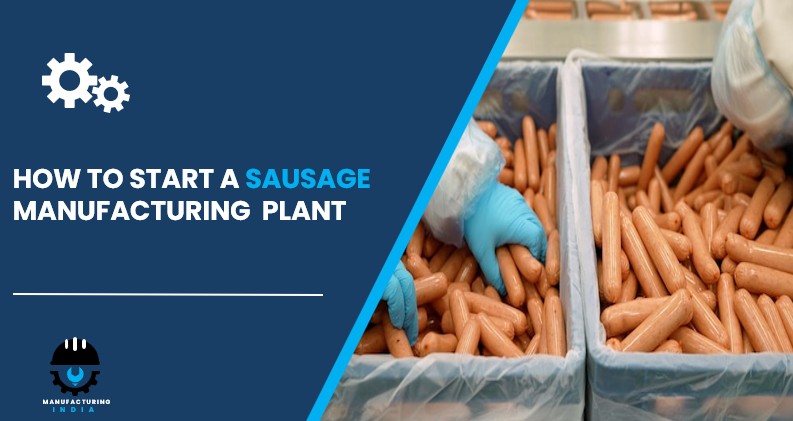
Setting up a sausage manufacturing plant in India represents a compelling investment opportunity driven by the surging consumer demand for convenience foods, ready-to-eat meat products, and protein-rich diets. As lifestyles become increasingly fast-paced and urbanization accelerates, sausages with their versatility, affordability, and ease of preparation have emerged as a staple across both retail and foodservice channels globally.
The global sausage market was valued at USD 49.60 Billion in 2025 and is projected to reach USD 71.83 Billion by 2034, exhibiting a CAGR of 4.2% from 2026 to 2034, according to IMARC Group estimates. This growth trajectory, combined with evolving consumer preferences for premium, ethnic, and plant-based sausage variants, creates a highly favorable environment for new manufacturing entrants.
What is Sausage?
Sausage is a processed meat product typically made from ground or minced meat such as pork, beef, or chicken or a combination thereof, blended with salt, spices, and herbs to deliver distinctive flavor profiles. The seasoned meat mixture is stuffed into natural or synthetic casings and shaped into links or rolls. Depending on the type and region, sausages may be fresh, cured, smoked, or fully cooked.
Sausages are universally consumed and valued for their rich flavor, convenience, and culinary versatility. They are used across breakfast, snacks, main dishes, and ready-to-eat food products, and are integral to culinary traditions across virtually every global culture and region. The sausage market includes several product types such as fresh, cooked, smoked, cured, and plant-based sausages, each designed to meet varying consumer tastes and dietary preferences. These products serve a wide range of end-use industries, including foodservice and hospitality businesses, retail channels, and manufacturers of processed foods and ready-to-eat meals. Key applications of sausages span breakfast meats, snack products, ready-to-eat kits, frozen meals, and restaurant supply chains, highlighting their versatility across consumer and commercial food segments. The manufacturing process typically begins with meat selection, followed by grinding, mixing and seasoning to achieve desired flavor profiles, stuffing into casings, and then undergoing curing or smoking where applicable. The process is completed through cooking or drying stages and finalized with packaging to ensure product quality, safety, and shelf-life.
Cost of Setting Up a Sausage Manufacturing Plant
The total cost of establishing a sausage manufacturing plant is influenced by several key parameters: production capacity, product mix (fresh, cooked, smoked, cured, plant-based), automation level, plant location, raw material sourcing strategy, cold-chain requirements, and applicable regulatory standards. Below is a structured breakdown of all major cost components.
1. Capital Expenditure (CapEx)
Total capital investment in a sausage manufacturing plant covers the following major heads:
Land and Site Development
This includes land acquisition, site preparation, boundary development, land registration, and utilities connectivity. Site selection should prioritize proximity to meat processing hubs, cold storage logistics, and target retail or foodservice markets. Compliance with food-grade facility standards including drainage systems, sanitation infrastructure, and temperature control zoning is essential from the outset.
Civil Works and Construction
Building costs encompass the main production facility (including temperature-controlled processing rooms), raw material cold storage, finished goods refrigeration warehouses, a quality control laboratory, administrative block, utility area, wastewater treatment plant, and worker amenities. Construction must comply with food safety standards including HACCP, GMP, and applicable national food manufacturing regulations.
Machinery and Equipment
Machinery represents the single largest component of CapEx. Key equipment required for a sausage manufacturing plant includes:
- Meat Grinders (industrial-grade, single and double-cut configurations)
- Mixers and Blenders for meat and seasoning homogenization
- Stuffing Machines (automatic and semi-automatic, for natural and collagen casings)
- Continuous Cookers and Smokers (chamber and tunnel-type)
- Sausage Linking and Portioning Machines
- Curing and Brining Systems
- Vacuum Packaging Machines and Modified Atmosphere Packaging (MAP) Lines
- Cold Storage Rooms and Blast Freezer Units
- Metal Detectors and X-Ray Inspection Systems
- Wastewater Treatment and Fat Separation Systems
- Process Control and Automation Systems (PLC/SCADA)
- Quality Control Laboratory Equipment (microbiological testing, pH measurement, fat analysis)
Other Capital Costs
These include pre-operative expenses, commissioning charges, import duties on specialized cold-chain and food-processing equipment, effluent treatment infrastructure, hygiene and sanitation systems, staff training costs, and regulatory compliance setup.
Request a Sample Report for In-Depth Market Insights: https://www.imarcgroup.com/sausage-manufacturing-plant-project-report/requestsample
2. Operational Expenditure (OpEx)
Once the plant is commissioned, the ongoing cost structure is driven by the following key components:
Raw materials primarily meat (chicken, pork, beef), fat, spices, and casings constitute the dominant operating cost at 75–80% of total OpEx. Utilities, driven by refrigeration, cooking, and smoking systems, account for 5–10% of OpEx. Energy efficiency investments, particularly in cold-chain systems, provide meaningful operating cost reduction opportunities.
3. Plant Capacity
The proposed sausage manufacturing facility is designed with an annual production capacity of 3,000 MT, enabling economies of scale while maintaining operational flexibility. This capacity supports a diversified product portfolio of fresh, cooked, smoked, and specialty sausage products.
4. Profit Margins and Financial Projections
The project demonstrates healthy profitability under normal operating conditions. Financial projections should encompass capital investment, operating costs, capacity ramp-up schedule, pricing strategy by product type, and forward demand outlook. A comprehensive analysis should include sensitivity analysis, Net Present Value (NPV), Internal Rate of Return (IRR), and Payback Period calculations.
Why Set Up a Sausage Manufacturing Plant?
Growing Demand for Convenience Foods
As lifestyles become busier and dual-income households proliferate, consumers are increasingly seeking quick-to-prepare, easy-to-cook meals. Sausages especially pre-cooked, chilled, and frozen varieties are ideally positioned to serve this demand. Their long shelf life, portionability, and broad cooking versatility make them a staple across home kitchens and foodservice operations alike.
Expanding Foodservice and QSR Sector
The development of the foodservice sector spanning fast-food chains, quick-service restaurants, and street food establishments provides a structurally growing demand base for sausage products globally. Ready-to-cook and ready-to-eat sausage formats used in breakfast, burgers, sandwiches, and main courses are core items for these high-volume channels.
Health-Conscious and Premium Product Trends
Rising consumer awareness around nutrition is driving demand for healthier sausage formulations: low-fat, low-sodium, preservative-free, and naturally cured variants. Simultaneously, premium and artisanal sausage categories including ethnic varieties such as chorizo, bratwurst, Italian sausage, and merguez are expanding rapidly as consumers explore diverse flavor profiles and quality tiers.
Sustainability and Plant-Based Alternatives
Consumer interest in plant-based diets and sustainable food production is creating a rapidly expanding niche for vegetarian and vegan sausages made from pea protein, soy, lentils, and seitan. Forward-looking sausage manufacturers are investing in alternative protein processing capability to capture this fast-growing segment alongside conventional meat-based production.
Strong Meat Supply Infrastructure
Global annual meat output exceeds 360 million tonnes (FAO), providing a robust and diversified raw material supply base for sausage manufacturers. Well-developed cold-chain logistics, growing poultry and pork production in key markets, and competitive meat pricing support a favorable input cost environment for plant operators.
Improved Cold Chain and Retail Accessibility
Expanding cold-chain capabilities from farm to retail shelf combined with broader distribution through supermarkets, convenience stores, and e-commerce platforms, are substantially improving the accessibility and shelf life of sausage products. These infrastructure improvements are enabling manufacturers to expand geographic reach and enter new consumer segments.
Manufacturing Process Overview
The sausage manufacturing process is a multi-stage food processing operation that transforms raw meat and ingredient inputs into safe, shelf-stable, or refrigerated finished products. The key process stages are:
- Meat Selection and Preparation: Raw meat (chicken, pork, beef) is received, inspected, trimmed, and tempered to optimal processing temperature. Fat and connective tissue are controlled to specification.
- Grinding: Trimmed meat is passed through industrial grinders at defined plate sizes to achieve the required texture and particle size for each sausage variety.
- Mixing and Seasoning: Ground meat is blended with salt, spices, herbs, water, ice, phosphates, and functional additives in high-speed mixers to achieve uniform distribution and target protein extraction.
- Stuffing: The seasoned meat blend is filled into natural or collagen casings using automatic stuffing machines. Link formation, twisting, and portioning are performed at this stage.
- Curing and Smoking: Where applicable, sausages undergo curing (salt/nitrate treatment) and/or smoking in chamber or continuous smokers, imparting flavor, color, and preservation characteristics.
- Cooking or Drying: Sausages are fully cooked (steam, hot water, or combination cooking) or dried to target water activity (aw) levels, depending on the product type and shelf-life requirements.
- Cooling and Chilling: Cooked products are rapidly chilled to below 4°C using cold water or blast chilling systems to arrest bacterial growth and stabilize product temperature.
- Quality Control and Testing: Every batch undergoes microbiological testing, pH measurement, fat content analysis, color assessment, and sensory evaluation against defined product specifications.
- Packaging and Labeling: Approved products are vacuum-packed, modified-atmosphere packed (MAP), or conventionally wrapped, labeled for traceability and retail compliance, and dispatched to cold storage or distribution.
Key Applications of Sausage
The sausage market serves several major end-use segments across consumer and commercial channels. Retail consumers represent a significant segment, purchasing fresh, pre-cooked, and frozen sausages for home cooking, including breakfast meats, dinner sausages, and convenient packaged options. The foodservice and hospitality sector also constitutes a major market, supplying restaurants, hotels, fast-food chains, and institutional catering services that require efficient and consistent meal preparation solutions. In the processed foods and ready-to-eat meals segment, sausages are widely used as key ingredients in frozen meals, sausage rolls, pasta sauces, pre-cooked meal kits, and snack products due to their versatility and convenience. The vegetarian and plant-based sausage category has emerged as a rapidly growing segment, utilizing ingredients such as pea protein, soy, seitan, and lentil-based formulations to meet increasing demand from health-conscious and vegan consumers. Additionally, export markets play an important role by creating demand for premium, specialty, and ethnic sausage varieties supplied through international retail and foodservice channels.
Global Sausage Market Outlook
The global sausage market was valued at USD 49.60 Billion in 2025 and is forecast to reach USD 71.83 Billion by 2034, growing at a CAGR of 4.2% over the projection period. This sustained growth is fueled by multiple structural drivers:
- Rising global demand for convenience and ready-to-eat protein-based food products
- Urbanization and changing dietary patterns in emerging markets driving processed meat adoption
- Robust growth in the global foodservice sector, QSR chains, and street food markets
- Expanding cold-chain infrastructure improving product availability and shelf-life performance
- Innovation in premium, artisanal, ethnic, and plant-based sausage product categories
- Increasing per-capita meat consumption, particularly poultry and pork, in developing regions
Major global players in the sausage industry include Tyson Foods, JBS S.A., Smithfield Foods (WH Group), Hormel Foods Corporation, OSI Group, Danish Crown (Tulip Food Company), and Pilgrim’s Pride Corporation, serving foodservice, retail, and processed food end-use sectors across all major markets.
Licenses and Regulatory Requirements
Establishing a sausage manufacturing unit requires a range of approvals and certifications, which may vary by country and jurisdiction, including:
- Business registration and company incorporation
- Factory License under applicable labor and manufacturing laws
- FSSAI License (India) or equivalent national food safety authority authorization
- Environmental Clearance from pollution control authorities (Consent to Establish and Consent to Operate)
- Wastewater and Effluent Discharge Authorization
- Fire Safety Certificate and NOC
- HACCP (Hazard Analysis and Critical Control Points) Certification
- ISO 22000 Food Safety Management System Certification
- ISO 9001 Quality Management System Certification
- BRC/IFS Certification for retail supply chain compliance
- Halal / Kosher Certification (for applicable export markets)
- USDA/EU Export Certification (for international market access)
- Cold Storage Licensing under applicable food handling regulations
Key Challenges to Consider
Raw Material Price Volatility
Meat prices particularly pork, chicken, and beef are subject to significant cyclical price movements driven by feed costs, disease outbreaks (e.g., African Swine Fever), supply-demand imbalances, and logistics disruptions. Managing raw material costs through long-term procurement contracts, supplier diversification, and strategic inventory management is critical for protecting plant economics.
Cold-Chain and Temperature Management
Maintaining continuous temperature control throughout production, storage, and distribution is non-negotiable for food safety compliance and product quality. Investment in reliable refrigeration, blast chilling, and cold-chain logistics infrastructure requires sustained capital allocation and skilled maintenance capability.
Food Safety and Regulatory Compliance
Sausage manufacturing is one of the most heavily regulated food processing categories. Maintaining HACCP compliance, microbiological safety standards, allergen management, and traceability across the entire supply chain requires robust quality management systems, skilled food safety personnel, and continuous regulatory monitoring.
Customer and Retailer Qualification
New sausage manufacturers must undergo formal supplier qualification processes with major retail chains, foodservice distributors, and institutional buyers. These processes include factory audits, product specification approvals, shelf-life validation, and regulatory documentation review, which can extend time-to-market by 6–12 months for key accounts.
Competitive Market Dynamics
The sausage manufacturing market features established multinational players with significant brand equity, distribution reach, and scale advantages alongside strong regional and artisanal producers. New entrants must develop a clear market positioning strategy through niche product categories, local supply advantage, premium formulations, or private-label manufacturing to build a sustainable competitive position.
Sustainability and Regulatory Evolution
Growing regulatory and brand-owner pressure on environmental sustainability, animal welfare, and processed meat labeling is reshaping the industry landscape. Manufacturers must invest in cleaner production technologies, reduced sodium and additive formulations, sustainable packaging, and transparency in ingredient sourcing to remain aligned with evolving regulatory and consumer expectations.
Frequently Asked Questions (FAQs)
1. How much does it cost to set up a sausage manufacturing plant?
The investment depends on plant capacity, product range, level of automation, cold-chain infrastructure, and location. Costs cover land, civil construction (including refrigerated rooms), machinery (grinders, mixers, stuffers, smokers, packaging lines), cold storage, utilities, working capital, and regulatory compliance.
2. Is sausage manufacturing a profitable business in 2026?
Yes. Strong and growing demand from retail, foodservice, and processed food sectors combined with gross margins of 25–35% for value-added products makes sausage manufacturing financially attractive. Break-even periods of 3–5 years are achievable with disciplined capacity ramp-up and effective market positioning.
3. What machinery and equipment are required for a sausage plant?
Key equipment includes industrial meat grinders, mixers and blenders, automatic stuffing machines, cookers and smokers, blast chillers, cold storage rooms, vacuum and MAP packaging lines, metal detectors, and quality control laboratory instruments.
4. What licenses and approvals are required to start a sausage manufacturing facility?
Required approvals generally include company registration, factory license, FSSAI or national food safety authorization, environmental clearances, HACCP certification, fire safety NOC, and cold storage licensing. Export markets require additional certifications including USDA, EU, Halal, or Kosher as applicable.
5. How long does it take to commission a sausage manufacturing plant?
Typically 12–20 months from project initiation to commercial production launch, depending on project scale, machinery lead times, cold-chain infrastructure complexity, regulatory approvals, and customer qualification requirements.
6. What are the key raw materials for sausage manufacturing?
Primary raw materials include fresh or frozen meat (pork, chicken, beef), animal fat, salt, spices and seasonings, functional additives (phosphates, nitrates/nitrites, antioxidants), natural and collagen casings, and water/ice. Plant-based sausages use pea protein, soy isolate, or other plant protein concentrates.
7. What is the break-even period for a sausage manufacturing plant?
The break-even period generally ranges from 3–5 years for well-positioned plants, depending on capacity utilization, product mix between standard and premium/specialty grades, operating efficiency, and market demand growth trajectory.
8. What are the main types of sausage and their market applications?
The primary categories include fresh sausages (retail cooking), cooked sausages (ready-to-eat), smoked sausages (premium/specialty), cured sausages (charcuterie), dry/semi-dry sausages (long shelf-life), and plant-based sausages (vegan/vegetarian), each serving distinct consumer and foodservice segments.
9. What government incentives are available for food manufacturers?
Manufacturers may benefit from state industrial investment incentives, capital subsidies, food processing sector promotion schemes, infrastructure support in designated food parks, PLI (Production Linked Incentive) schemes for food processing (India), and export promotion benefits for internationally certified products.
10. How do plant-based sausages compare to conventional meat sausages in terms of setup?
Plant-based sausage production requires different processing equipment (high-shear mixing, extrusion systems for protein texturization) and ingredient sourcing chains compared to conventional meat processing. However, many packaging, cold-chain, and quality management systems are common across both product types, enabling potential dual-production capability.
Key Takeaways for Investors
The sausage manufacturing industry represents a well-established, high-demand, and financially attractive investment opportunity with strong and durable growth dynamics globally. Key investment highlights include. The sausage market presents a favorable investment opportunity, with the global market projected to grow from USD 49.60 billion in 2025 to USD 71.83 billion by 2034, reflecting a compound annual growth rate (CAGR) of 4.2%. Profitability prospects are attractive, with gross profit margins typically ranging between 25–35% for standard product categories, while premium and specialty products can generate even higher returns. Under efficient operational management, net profit margins generally range from 12–20%, and businesses can potentially achieve break-even within 3–5 years through disciplined capacity utilization and optimized production efficiency. The industry benefits from diversified demand across retail, foodservice, processed foods, and export markets, reducing dependency on any single segment. Additionally, plant-based and premium sausage categories provide strong opportunities for product innovation and value creation. Long-term market growth is supported by structural factors including rapid urbanization, increasing consumer preference for convenience foods, rising protein consumption, and expanding cold-chain infrastructure that is improving market accessibility in emerging economies.
About the Author