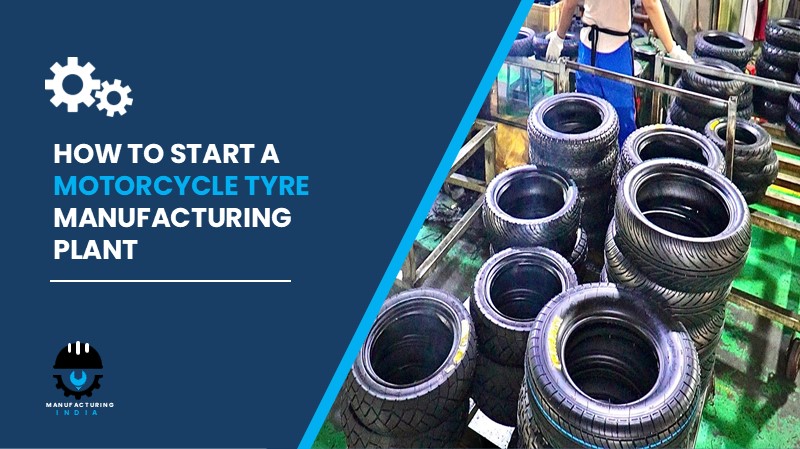
Setting up a motorcycle tyre manufacturing plant in India presents a compelling investment case driven by the country’s massive and still-expanding two-wheeler population, rising urban mobility needs, and one of the world’s largest and fastest-growing replacement tyre markets. India is among the most significant motorcycle markets globally – with more than 50% of households owning a two-wheeler – and alongside China, accounts for 28 million sales out of the 55 million two-wheelers sold globally between January and October 2025. This scale of motorcycle ownership creates a continuous and predictable demand base for both original equipment manufacturer (OEM) tyres and the high-frequency aftermarket replacement segment, where shorter tyre replacement cycles ensure recurring volume. The India motorcycle tyre market was valued at USD 1,029.83 million in 2025 and is expected to reach USD 2,488.54 million by 2034 at a CAGR of 10.3% from 2026 to 2034, according to IMARC Group estimates – making it one of the fastest-growing automotive component markets in Asia.
India’s structural advantages reinforce the investment case strongly. Rapid urbanisation, traffic congestion, and rising fuel costs are encouraging motorcycle usage, particularly in semi-urban and rural areas where two-wheelers remain the most affordable and practical mode of personal transportation. The expansion of e-commerce and last-mile delivery services using motorcycles is further boosting tyre consumption. The Government of India’s Make in India initiative and the country’s dense concentration of two-wheeler OEM facilities across Tamil Nadu, Gujarat, Maharashtra, and Rajasthan provide a ready-made industrial ecosystem for a new motorcycle tyre manufacturing plant in India – offering both captive OEM supply opportunities and large-scale aftermarket distribution potential.
India’s position as one of the world’s two largest two-wheeler markets, a domestic motorcycle tyre market growing at 10.3% CAGR through 2034, and a high-frequency replacement demand cycle make a motorcycle tyre manufacturing plant a financially compelling and strategically timed investment. With gross margins of 25–35% and net margins of 10–18% across a capacity of 2–10 million units annually, the return profile is robust and the demand outlook structurally durable.
What is a Motorcycle Tyre?
Motorcycle tyres are rubber-based components designed to provide traction, stability, load-bearing capacity, and shock absorption for two-wheeled vehicles. They are engineered to withstand varying road conditions, speeds, and weather environments while ensuring rider safety and performance. Motorcycle tyres are manufactured using natural and synthetic rubber, reinforcing fabrics, steel cords, and chemical additives to enhance durability and grip.
Available in multiple designs – including tube-type, tubeless, radial, and bias-ply variants – motorcycle tyres cater to different motorcycle categories, including commuter bikes, sports motorcycles, cruisers, and off-road vehicles. Performance characteristics such as tread pattern, compound composition, and tyre profile play a critical role in handling, braking, and fuel efficiency, making tyre selection a technically demanding decision for OEMs and individual riders alike.
The primary production method is raw material mixing and compounding, calendering and fabric preparation, bead and tread assembly, tyre building and shaping, and vulcanisation (curing) and finishing – a multi-stage process that converts raw polymer and fabric inputs into a precision-engineered safety-critical component. End-use industries served include two-wheeler manufacturing (OEMs), the aftermarket replacement sector, motorsports and performance riding, and logistics and delivery services.
Cost of Setting Up a Motorcycle Tyre Manufacturing Plant in India
The cost of establishing this facility depends on capacity, technology selection, plant location, degree of automation, and regulatory compliance requirements.
1. Capital Expenditure (CapEx)
Total capital investment for a motorcycle tyre manufacturing plant in India covers land acquisition, site preparation, civil construction, machinery, and pre-operative expenses. The cost of land and site development – including charges for land registration, boundary development, and other related expenses – forms a substantial part of the overall investment. This allocation ensures a solid foundation for safe and efficient plant operations. Investors can significantly reduce land costs by locating the facility within an industrial estate, automotive ancillary cluster, or Special Economic Zone (SEZ), which also provide shared utility infrastructure and potential state-level investment incentives.
Civil works and construction cover the main compounding and production building, raw material storage areas for natural/synthetic rubber, carbon black, fabric/nylon cord, and bead wire, a finished goods warehouse, a quality control laboratory, and an administrative block. Given the high-temperature and chemically intensive nature of tyre compounding and vulcanisation processes, civil infrastructure must incorporate heat-resistant flooring, chemical-resistant coatings, and adequate ventilation systems.
Machinery costs account for the largest portion of total capital expenditure. Key machinery required includes:
- Internal mixers and compound mills
- Calendering machines
- Tyre building machines
- Vulcanisation presses
- Inspection and testing equipment
Other capital costs include the effluent treatment plant (ETP), advanced process monitoring systems, pre-operative expenses, trial production costs, and commissioning charges. All machinery must comply with industry standards for safety, efficiency, and reliability as applicable to automotive component manufacturing.
Request a Sample Report for In-Depth Market Insights: https://www.imarcgroup.com/motorcycle-tyre-manufacturing-plant-project-report/requestsample
2. Operational Expenditure (OpEx)
The operating cost structure of a motorcycle tyre manufacturing plant is primarily driven by raw material consumption. Natural and synthetic rubber – the dominant input material – accounts for approximately 55–65% of total operating expenses (OpEx), making polymer procurement strategy the single most critical determinant of cost competitiveness and margin protection. Carbon black, fabric/nylon cord, and bead wire are the secondary raw material inputs. Securing long-term supply agreements with domestic rubber producers and established chemical additive suppliers is essential for production cost stability and supply chain continuity.
Utility costs – comprising electricity for internal mixers, vulcanisation presses, and calendering machines, as well as water and steam – represent 15–25% of total OpEx, reflecting the energy-intensive nature of rubber compounding and curing operations. This is a materially higher proportion than most manufacturing operations and underscores the importance of securing reliable and competitively priced power supply when selecting the plant location. Other ongoing operating costs include transportation, packaging, salaries and wages, depreciation, taxes, equipment repairs and maintenance, and other miscellaneous expenses.
By the fifth year of operations, the total operational cost is expected to increase substantially due to factors such as inflation, market fluctuations, and potential rises in the cost of key materials. Additional factors including supply chain disruptions, rising consumer demand, and shifts in the global economy are expected to contribute to this increase.
3. Plant Capacity
The proposed manufacturing facility is designed with an annual production capacity ranging between 2 million and 10 million units, enabling economies of scale while maintaining operational flexibility. Capacity can be customised per investor requirements based on target OEM and aftermarket segments, available capital, and degree of automation. Profitability improves materially with higher capacity utilisation, making domestic OEM supply agreements with two-wheeler manufacturers and channel partnerships with aftermarket distribution networks a commercial priority from the commissioning stage.
4. Profit Margins and Financial Projections
The project demonstrates healthy profitability potential under normal operating conditions. Gross profit margins typically range between 25–35%, supported by stable demand and value-added applications. Net profit margins range between 10–18%. A comprehensive financial model covering NPV (net present value), IRR (internal rate of return), payback period, liquidity analysis, uncertainty analysis, sensitivity analysis, and a full five-year profit and loss account provides investors with a rigorous analytical framework for assessing financial viability and long-term sustainability across different capacity and pricing scenarios.
Why Set Up a Motorcycle Tyre Plant in India?
World-Scale Two-Wheeler Ownership Driving Sustained Demand. India is one of the world’s two largest two-wheeler markets, with more than 50% of households owning a motorcycle or scooter. Alongside China, India accounted for 28 million sales out of 55 million two-wheelers sold globally between January and October 2025 – a volume that generates continuous and large-scale demand for both OEM and replacement motorcycle tyres, making the domestic market structurally self-sustaining for new manufacturing capacity.
High Replacement Frequency Ensures Consistent Aftermarket Revenue. Motorcycle tyres have shorter replacement cycles compared to passenger car tyres, ensuring consistent and recurring aftermarket demand regardless of new vehicle sales fluctuations. The strong aftermarket replacement cycle, supported by frequent tyre wear particularly in India’s road conditions, contributes significantly to market stability and provides domestic manufacturers with a predictable, high-volume revenue stream that operates independently of OEM production cycles.
Rapid Market Growth at 10.3% CAGR. The India motorcycle tyre market was valued at USD 1,029.83 million in 2025 and is projected to reach USD 2,488.54 million by 2034, growing at a CAGR of 10.3% from 2026 to 2034 according to IMARC Group estimates. This growth rate – significantly above the global average for automotive component markets – reflects the intersection of expanding motorcycle ownership, rising replacement demand, and the structural shift toward higher-value tubeless and radial tyre formats across India’s two-wheeler fleet.
Electric Two-Wheeler Growth Creating New Demand Segments. The growth of electric motorcycles and scooters is creating demand for specialised low-resistance, high-durability tyres. Advancements in tyre technology, such as tubeless tyres, improved grip compounds, and enhanced durability, are improving safety and rider experience while creating value-added manufacturing opportunities for producers able to meet the evolving technical specifications of India’s expanding electric two-wheeler OEM base.
E-Commerce and Last-Mile Delivery Boosting Tyre Consumption. Expansion of e-commerce and last-mile delivery services using motorcycles is boosting tyre consumption across India’s urban and semi-urban delivery networks. Two-wheelers used in logistics and delivery require durable tyres designed for extended mileage and load-bearing efficiency – a growing product segment where domestic producers with rapid supply and cost advantages are well-positioned to serve both fleet operators and organised logistics companies.
Latest Industry Developments Confirming Market Momentum. In October 2025, Bridgestone Corporation announced plans to introduce its track-only premium motorcycle tyre, the RACING BATTLAX V03, in the European and North American markets in 2026, leveraging technologies developed through its long-standing involvement in top-tier motorsports. In February 2025, Eurogrip Tyres introduced its globally recognised Trailhound tyre range in the Indian market, strengthening its presence in India’s expanding adventure motorcycle segment, with two variants – the Trailhound SCR for modern-classic roadsters and café racers, and the Trailhound STR for medium to large adventure motorcycles – confirming that India is an active and prioritised launch market for global tyre manufacturers.
Manufacturing Process – Step by Step
The motorcycle tyre manufacturing process uses raw material mixing and compounding, calendering and fabric preparation, bead and tread assembly, tyre building and shaping, and vulcanisation (curing) and finishing as the primary production method. Each stage is precision-controlled to ensure dimensional accuracy, structural integrity, and compliance with OEM and aftermarket performance and safety specifications.
- Raw Material Receipt and Inspection: Natural/synthetic rubber, carbon black, fabric/nylon cord, bead wire, and chemical additives are received at the facility and subjected to incoming quality checks for grade specification, purity, and dimensional compliance before entering the process flow.
- Raw Material Mixing and Compounding: Natural and synthetic rubber is blended with carbon black, chemical additives, and vulcanising agents in internal mixers and compound mills. This compounding stage determines the final tyre’s physical properties – grip, durability, heat resistance, and rolling resistance – and is the most technically critical step in the entire process.
- Calendering and Fabric Preparation: Rubber compound is applied uniformly to fabric/nylon cord layers through calendering machines, producing rubberised fabric plies that form the structural reinforcement of the tyre carcass. Bead wire assemblies are also prepared at this stage to provide the structural foundation for tyre mounting on the wheel rim.
- Bead and Tread Assembly: Rubber tread compounds and bead wire assemblies are prepared and staged for incorporation into the tyre building process, with each component cut and shaped to the precise dimensions required for the target tyre size and specification.
- Tyre Building and Shaping: All components – rubberised fabric plies, bead assemblies, tread compound, and sidewall rubber – are assembled layer by layer on tyre building machines to produce a green (uncured) tyre of the correct shape and construction for the target performance specification.
- Vulcanisation (Curing) and Finishing: Green tyres are loaded into vulcanisation presses where they are subjected to high temperature and pressure in precision moulds. The curing process cross-links the rubber polymer chains, permanently setting the tyre’s shape, tread pattern, and mechanical properties. After curing, tyres are trimmed, deflashed, and subjected to visual and dimensional inspection.
- Inspection and Testing: Finished tyres are evaluated on inspection and testing equipment for uniformity, balance, dimensional compliance, and structural integrity before release for dispatch to OEM or aftermarket customers.
- Packaging and Dispatch: Approved tyres are packaged and dispatched to end-use customers across two-wheeler manufacturing OEMs, the aftermarket replacement sector, motorsports and performance riding, and logistics and delivery services.
Key Applications
The motorcycle tyre manufacturing plant serves a diverse and commercially significant range of end-use segments across India’s automotive and mobility economy.
- OEM Two-Wheeler Manufacturing: Motorcycle tyres are supplied directly to two-wheeler manufacturers for factory-fitted applications, requiring strict adherence to performance and safety specifications and consistent supply reliability across production schedules.
- Aftermarket Replacement: The replacement segment represents a significant share of total demand, driven by regular tyre wear, punctures, and performance upgrades by riders – ensuring a recurring and high-volume revenue stream for domestic producers independent of new vehicle sales.
- Motorsports and Performance Riding: High-performance motorcycle tyres are used in racing and sports riding, where superior grip, heat resistance, and handling precision are critical. This premium segment commands higher price points and supports value-added product differentiation for manufacturers with technical compounding capabilities.
- Logistics and Delivery Services: Two-wheelers used in last-mile delivery and logistics require durable tyres designed for extended mileage and load-bearing efficiency, representing a fast-growing institutional procurement segment driven by India’s expanding e-commerce and quick-commerce delivery networks.
- Commuter Motorcycles: Standard commuter tyre variants serve India’s largest volume segment – daily urban and semi-urban commuter motorcycles – where durability, fuel efficiency, and affordability are the primary purchase criteria.
- Electric Two-Wheelers: Specialised low-resistance, high-durability tyres are required for electric motorcycles and scooters, representing a growing and technically distinct product segment aligned with India’s expanding electric two-wheeler OEM base.
Leading Manufacturers
The global motorcycle tyre industry is served by several established multinational players with extensive production capacities and diverse application portfolios. Key players operating in this market include:
- Bridgestone Corporation
- Michelin Group
- Continental AG
- Pirelli & C. S.p.A
- The Goodyear Tire & Rubber Company
- Yokohama Rubber Co., Ltd.
- Sumitomo Rubber Industries
All of these manufacturers serve end-use sectors including two-wheeler manufacturing (OEMs), the aftermarket replacement sector, motorsports and performance riding, and logistics and delivery services – the same markets that a domestic Indian motorcycle tyre manufacturing plant can target at competitive landed cost advantage.
Timeline to Start the Plant
Investors should plan for a structured pre-production and commissioning phase covering the following key stages:
- Feasibility study and project report preparation
- Land acquisition and site development
- Regulatory approvals and environmental clearances
- Factory licence and fire safety compliance
- Machinery procurement and installation
- Raw material supplier agreements and supply chain setup
- Trial production and quality testing
- Commercial production launch
Licences and Regulatory Requirements
Starting a motorcycle tyre manufacturing unit in India requires several approvals:
- Business registration (Proprietorship, LLP, or Private Limited Company)
- Factory Licence under the Factories Act
- Environmental Clearance from the State Pollution Control Board
- GST Registration
- Fire Safety NOC
- Hazardous chemical compliance for storage and handling of rubber chemicals, carbon black, and vulcanising agents
- Effluent Treatment Plant (ETP) operational clearance
- Occupational Health and Safety compliance
Key Challenges to Consider
High Capital Requirements. Establishing a fully equipped motorcycle tyre manufacturing plant – with internal mixers, calendering machines, tyre building machines, vulcanisation presses, and testing equipment at a capacity of 2–10 million units annually – represents a significant upfront capital investment. Access to automotive sector financing, MSME credit-linked subsidy schemes, and state government investment promotion grants can help bridge funding requirements.
Raw Material Price Volatility. Natural and synthetic rubber, accounting for 55–65% of total OpEx, is directly linked to global natural rubber commodity cycles and petrochemical feedstock prices. Carbon black and fabric/nylon cord prices are also subject to fluctuation. Long-term procurement contracts with domestic rubber producers and diversified sourcing are essential strategies for managing input cost volatility and protecting operating margins.
High Utility Cost Intensity. Utilities – at 15–25% of total OpEx – represent an unusually large cost component reflecting the energy demands of vulcanisation presses and internal mixers. Securing a reliable and cost-competitive electricity supply, ideally through industrial estate power infrastructure or open access renewable arrangements, is essential for keeping production costs at competitive levels.
Regulatory Compliance. Tyre manufacturing facilities in India must comply with Bureau of Indian Standards (BIS) certification requirements for motorcycle tyre safety ratings, as well as factory safety norms, environmental regulations, and state-level pollution control board requirements. Handling rubber chemicals and carbon black adds hazardous material compliance obligations, requiring dedicated safety systems and ongoing documentation.
Competition from Global Players. Established multinational manufacturers – including Bridgestone Corporation, Michelin Group, Continental AG, Pirelli & C. S.p.A, Goodyear, Yokohama, and Sumitomo Rubber Industries – set high benchmarks for product quality, OEM supply reliability, and pricing. Domestic producers must compete through localisation, faster delivery, competitive cost structures, and the ability to serve India-specific commuter and adventure tyre segments with tailored product development.
Skilled Manpower. Operating internal mixers, vulcanisation presses, tyre building machines, and precision testing equipment requires technically trained process engineers and quality control personnel. Recruiting, training, and retaining qualified tyre manufacturing technicians in a competitive automotive component labour market is a recurring operational challenge.
Frequently Asked Questions
1. How much does it cost to set up a motorcycle tyre manufacturing plant in India?
Total setup cost depends on plant capacity, location, technology selection, and automation level. Key cost components include land and site development, civil construction, machinery (internal mixers, calendering machines, tyre building machines, vulcanisation presses, testing equipment), and pre-operative expenses. A detailed feasibility study is recommended to generate accurate project-specific cost estimates.
2. Is motorcycle tyre manufacturing profitable in India in 2026?
Yes. The project delivers strong financial performance, with gross profit margins of 25–35% and net profit margins of 10–18% under normal operating conditions. The India motorcycle tyre market is projected to grow from USD 1,029.83 million in 2025 to USD 2,488.54 million by 2034 at a CAGR of 10.3% according to IMARC Group, positioning domestic producers to capture a growing share of one of Asia’s fastest-expanding automotive component markets.
3. What machinery is required for a motorcycle tyre plant in India?
Essential equipment includes internal mixers and compound mills, calendering machines, tyre building machines, vulcanisation presses, and inspection and testing equipment.
4. What licences and approvals are required to start a motorcycle tyre plant in India?
Required approvals include business registration, Factory Licence, Environmental Clearance from the State Pollution Control Board, GST Registration, Fire Safety NOC, hazardous chemical compliance for rubber chemicals and carbon black, ETP operational clearance, and Occupational Health and Safety compliance.
5. What raw materials are needed for motorcycle tyre manufacturing?
The primary raw materials are natural/synthetic rubber (55–65% of OpEx), carbon black, fabric/nylon cord, and bead wire. Natural and synthetic rubber is the dominant cost driver, and supplier contract strategy for these inputs is the most critical operational cost management lever.
6. What are the environmental compliance requirements for a motorcycle tyre plant in India?
The facility must obtain Environmental Clearance from the State Pollution Control Board, operate an approved ETP, and comply with hazardous chemical handling regulations for rubber chemicals and carbon black. Regular effluent monitoring, air quality reporting, and waste management documentation are mandatory throughout operations.
7. What is the best location to set up a motorcycle tyre plant in India?
Locations offering proximity to natural/synthetic rubber supply chains, established two-wheeler OEM manufacturing clusters, and reliable industrial infrastructure are preferred. Tamil Nadu, Gujarat, Maharashtra, and Rajasthan – which host the majority of India’s two-wheeler OEM facilities – are strong candidates, as is proximity to the port infrastructure needed for importing speciality rubber grades and bead wire.
8. What is the break-even period for this type of plant in India?
The break-even period depends on plant capacity, total capital investment, product selling price, and capacity utilisation rate. A comprehensive financial analysis covering NPV, IRR, payback period, and uncertainty and sensitivity analysis – as provided in a full feasibility report – is the most reliable method for generating project-specific break-even timelines.
9. What government incentives are available for manufacturers in India?
Motorcycle tyre manufacturers in India can access the Production Linked Incentive (PLI) scheme for the automotive and auto components sector, MSME credit-linked capital subsidy schemes, state government investment promotion subsidies, and industrial estate or SEZ infrastructure benefits. Export promotion incentives administered by the Ministry of Commerce and Industry are also available for producers targeting OEM export supply or aftermarket distribution in South Asia and Southeast Asia.
Key Takeaways for Investors
A motorcycle tyre manufacturing plant in India offers a commercially well-grounded investment opportunity anchored by growing demand across two-wheeler OEM manufacturing, the aftermarket replacement sector, logistics and delivery services, and the rapidly expanding electric two-wheeler segment. The project is financially viable across the 2 to 10 million unit annual capacity range, with gross margins of 25–35% and net margins of 10–18% providing a strong return framework for investors at multiple capital scales. According to IMARC Group estimates, the India motorcycle tyre market is set to grow from USD 1,029.83 million in 2025 to USD 2,488.54 million by 2034 at a CAGR of 10.3% – one of the strongest growth rates in the broader Asian automotive component space. With India accounting for a major share of global two-wheeler sales, a high-frequency tyre replacement cycle, and active investment by global tyre brands in India-specific product launches, the long-term demand sustainability for domestically produced motorcycle tyres is structurally sound and commercially durable across all investment planning horizons.
About the Author