Setting up a calcium chloride production plant in India presents a compelling investment case driven by accelerating demand across the construction sector, road maintenance infrastructure, oil and gas exploration, agriculture, food processing, mining, and chemical manufacturing. As one of the most versatile inorganic industrial chemicals, calcium chloride (CaCl₂) underpins critical functions in India’s physical infrastructure – from accelerating concrete curing in low-temperature environments to stabilising unpaved roads and serving as a drilling fluid component in hydrocarbon exploration. With India’s infrastructure pipeline expanding rapidly under programmes such as the National Infrastructure Pipeline and the PM Gati Shakti initiative, the demand for essential construction and road maintenance chemicals is structurally poised for sustained growth.
India’s advantages as a production base for this investment are well-founded. The country possesses abundant limestone reserves – the primary raw material – across states such as Rajasthan, Madhya Pradesh, Andhra Pradesh, Gujarat, and Chhattisgarh, offering reliable and cost-competitive feedstock access. The Government of India’s Make in India initiative, combined with rising foreign direct investment in the petroleum and natural gas sector – which stood at Rs. 43,929.63 crore (USD 8.22 billion) between April 2000 and June 2025 as per DPIIT data – is simultaneously expanding the oil and gas drilling fluids market that relies on calcium chloride brines. These converging demand vectors make a calcium chloride production plant in India a financially compelling and strategically well-timed industrial investment.
India’s combination of limestone-rich raw material geography, booming infrastructure construction, expanding oil and gas activity, and policy support for chemical manufacturing makes calcium chloride production a financially viable and demand-backed industrial opportunity. With gross margins of 30–40% and a global market on a clear growth trajectory, investors entering this space are positioned to benefit from diversified end-use demand and durable break-even economics across plant capacities of 50,000 to 200,000 MT per annum.
What is Calcium Chloride?
Calcium chloride (CaCl₂) is an inorganic salt composed of calcium and chlorine, widely recognised for its hygroscopic and deliquescent properties. It appears as white crystalline flakes, granules, pellets, or powder and is highly soluble in water, releasing heat during dissolution due to its exothermic nature. The compound is produced either as a by-product of the Solvay process or through the reaction of limestone with hydrochloric acid, giving manufacturers a choice of production routes depending on raw material availability and process economics.
The product exhibits strong moisture absorption capability, high ionic strength, low freezing point, and excellent brine stability. These properties make it suitable for a wide range of industrial applications including de-icing, dust suppression, drilling fluids, food processing, refrigeration brines, and construction acceleration. Product forms include flakes, granules, pellets, and powder – with specific grades serving distinct end-use markets from food-grade processing to industrial road maintenance.
The calcium chloride production process uses brine extraction, chemical purification, evaporation and crystallisation, and pelletising or flaking as the primary production method. End-use industries served by this facility include construction, oil and gas, road maintenance, agriculture, food processing, mining, and chemical manufacturing – a broad and diversified demand base that significantly reduces revenue concentration risk for investors.
Cost of Setting Up a Calcium Chloride Production Plant in India
The cost of establishing this production facility depends on capacity, technology selection, plant location, degree of automation, and regulatory compliance requirements.
1. Capital Expenditure (CapEx)
Total capital investment for a calcium chloride production plant in India covers land acquisition, site preparation, civil construction, process machinery, and pre-operative expenses. Land and site development – including land registration charges, boundary development, drainage, and road access – forms a substantial part of the overall investment. Investors can reduce land acquisition costs meaningfully by locating the unit in an industrial estate, chemical zone, or Special Economic Zone (SEZ), which also provide shared utility infrastructure and potential fiscal benefits.
Civil works and construction cover the main process building, raw material storage areas for limestone and hydrochloric acid, finished goods warehouse, quality control laboratory, effluent treatment facility, and administrative block. Given that calcium chloride production involves corrosive chemical handling, civil and infrastructure materials must comply with acid-resistant and chemical safety standards, adding specificity to the construction cost base.
Machinery costs account for the largest portion of total capital expenditure. Key machinery required includes:
- Jaw crushers
- Dissolution tanks
- Filtration units
- Evaporation pans
- Pelletising drums
- Flakers
- Packaging machines
Other capital costs include the effluent treatment plant (ETP), advanced process monitoring systems, pre-operative expenses, trial production costs, and commissioning charges. Where specialised evaporation or pelletising equipment is imported, applicable customs duties and freight costs must be incorporated into the CapEx plan.
Request a Sample Report for In-Depth Market Insights: https://www.imarcgroup.com/calcium-chloride-manufacturing-plant-project-report/requestsample
2. Operational Expenditure (OpEx)
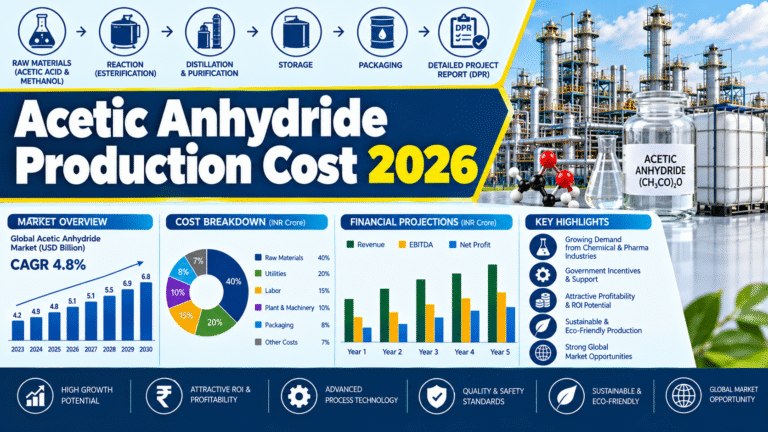
The operating cost structure of this production unit is primarily driven by raw material consumption. Limestone – the dominant feedstock – accounts for approximately 60–70% of total operating expenses, making supplier proximity and procurement strategy a critical determinant of production economics. Hydrochloric acid and purification chemicals are the secondary raw material inputs. Securing long-term supply agreements with limestone quarry operators in Rajasthan or Madhya Pradesh, and with domestic hydrochloric acid producers, is essential for cost stability and continuous production.
Utility costs – comprising electricity for evaporation and crushing operations, water, and steam – represent a notably higher proportion of OpEx than in most industrial chemical plants, accounting for 20–25% of total operating expenses. This reflects the energy-intensive nature of evaporation and crystallisation processes and underscores the importance of locating the facility near reliable, competitively priced power supply. Other ongoing costs include transportation, packaging, salaries and wages, equipment maintenance, depreciation, and applicable taxes.
By the fifth year of operations, total operational costs are expected to increase substantially due to inflation, market fluctuations, and potential rises in limestone and energy prices. Supply chain disruptions, rising consumer demand across construction and oil and gas end-uses, and broader shifts in the Indian and global economy are also expected to contribute to this cost progression over the project lifecycle.
3. Plant Capacity
The proposed production facility is designed with an annual capacity ranging between 50,000 and 200,000 MT, enabling economies of scale while maintaining operational flexibility. Capacity can be customised per investor requirements based on target market size, available capital, raw material access, and chosen production technology. Profitability improves materially with higher capacity utilisation, making sustained off-take agreements with construction contractors, municipal road maintenance agencies, and oil and gas operators a key priority during the commercial ramp-up phase.
4. Profit Margins and Financial Projections
The project demonstrates healthy profitability potential under normal operating conditions. Gross profit margins typically range between 30–40%, supported by stable multi-sector demand and the diversified application portfolio of calcium chloride. Net profit margins range between 15–25%. A comprehensive financial model covering NPV (net present value), IRR (internal rate of return), payback period, and a full five-year profit and loss account provides investors with a detailed framework for assessing the financial viability and long-term sustainability of the investment across different capacity and pricing scenarios.
Why Set Up a Calcium Chloride Plant in India?
Expanding Infrastructure Development and Road Maintenance. India’s massive infrastructure investment pipeline is generating consistent and growing demand for calcium chloride across concrete acceleration, soil stabilisation, and dust control on construction sites. The construction sector’s requirement for accelerated concrete curing in varied temperature conditions makes the product a standard input in large civil and infrastructure projects, ensuring reliable procurement volumes for domestic producers.
Growing Oil and Gas Exploration Activity. The oil and gas industry relies on calcium chloride brines for well completion, drilling fluids, and brine solutions – applications that demand significant product volumes per exploration or production well. As per data released by the Department for Promotion of Industry and Internal Trade (DPIIT), FDI inflows into India’s petroleum and natural gas sector stood at Rs. 43,929.63 crore (USD 8.22 billion) between April 2000 and June 2025, reflecting the scale and sustained pace of hydrocarbon sector investment that underpins demand for industrial drilling chemicals.
Dust Control and Road Safety Demand. Environmental regulations in India promoting dust control on unpaved roads, construction sites, and mining operations create a recurring and growing institutional demand base for calcium chloride. Municipal bodies, state highway authorities, and mining companies represent a stable procurement channel for producers with the capacity to supply consistently and at competitive price points.
Diverse Industrial Applications Reduce Revenue Risk. The product’s applications across construction, oil and gas, food processing, agriculture, pharmaceuticals, and refrigeration brines ensure diversified demand streams that reduce dependency on any single industry segment. This breadth of end-use means that a calcium chloride production plant is less vulnerable to cyclical downturns in any one sector, providing financial resilience across the plant’s operating lifetime.
By-Product Valorisation and Sustainability Opportunity. Manufacturing calcium chloride from Solvay process streams enables effective utilisation of industrial by-products, improving resource efficiency and enhancing the sustainability credentials of integrated chemical operations. For investors positioned near existing soda ash or chlor-alkali facilities, this route offers a compelling cost and circular economy advantage.
Active Global Industry Investment. In November 2025, Nuberg EPC was awarded the EPC contract to execute a 120 TPD Chlor-Alkali expansion and an 80 TPD calcium chloride plant for Al Ghaith Chemical Industries LLC at Sur Industrial City, Oman – the first large-scale Chlor-Alkali expansion of its kind in Oman. This confirms that integrated calcium chloride capacity investments are advancing actively across the Middle East and Asia, validating the commercial case for new capacity in India at comparable scale.
Manufacturing Process – Step by Step
The calcium chloride production process uses brine extraction, chemical purification, evaporation and crystallisation, and pelletising or flaking as the primary production method. Each stage is designed to ensure chemical purity, consistent product form, and compliance with end-use grade specifications.
- Raw Material Receipt and Inspection: Limestone, hydrochloric acid, and purification chemicals are received at the facility and subjected to incoming quality checks for grade specification, purity, and moisture content before entering the process flow.
- Crushing: Limestone is fed into jaw crushers to reduce particle size and increase reactive surface area for the subsequent dissolution and chemical reaction stage.
- Dissolution and Reaction: Crushed limestone is transferred to dissolution tanks where it reacts with hydrochloric acid to produce a calcium chloride solution. Process parameters including concentration, temperature, and reaction time are monitored and controlled throughout.
- Filtration and Purification: The crude calcium chloride solution passes through filtration units to remove insoluble impurities and suspended solids. Purification chemicals are added to achieve the required purity grade for the target end-use application.
- Evaporation and Crystallisation: The purified solution is concentrated in evaporation pans to remove excess water, driving the formation of calcium chloride crystals or a dense concentrated solution depending on the target product form.
- Pelletising or Flaking: Concentrated calcium chloride is processed through pelletising drums or flakers to produce the final product in the desired physical form – pellets, flakes, granules, or powder – according to customer and market specifications.
- Quality Inspection: Finished product is subjected to analytical testing for purity, moisture content, particle size distribution, and grade compliance before release for dispatch.
- Packaging and Dispatch: Approved product is packaged in moisture-resistant bags or bulk containers using packaging machines and dispatched to end-use customers across construction, oil and gas, road maintenance, agriculture, food processing, mining, and chemical manufacturing sectors.
Key Applications
The calcium chloride production plant serves a broad and economically critical range of industries and applications across India.
- Road Maintenance: Used for de-icing and anti-icing of highways, state roads, and airport runways, as well as for dust suppression on unpaved roads and construction access routes.
- Construction: Applied as a concrete accelerator, soil stabiliser, and foundation support agent in large civil, infrastructure, and building construction projects.
- Oil and Gas: Used in drilling fluids, well completion operations, and high-density brine solutions for hydrocarbon exploration and production activities.
- Dust Control: Stabilises unpaved roads, construction sites, and mining operations to reduce airborne particulate matter and comply with environmental dust regulations.
- Agriculture: Applied for soil improvement, crop yield enhancement, and as a plant nutrient supplement in agricultural operations.
- Food Processing: Used as a firming agent, preservative, and food-grade brine in cheese production, canned vegetables, and other food preservation applications.
- Mining: Deployed for dust suppression and road stabilisation at mine sites, as well as in mineral processing operations requiring moisture control.
Leading Manufacturers
The global calcium chloride industry is served by several established multinational producers with extensive production capacities and diverse application portfolios. Key players operating in this market include:
- Tetra Technologies Inc.
- Ward Chemical Ltd.
- Solvay S.A.
- Tiger Calcium Services Inc.
- Nedmag B.V.
All of these producers serve end-use sectors including construction, oil and gas, road maintenance, agriculture, food processing, mining, and chemical manufacturing – the same markets that Indian producers can target as domestic demand continues to accelerate.
Timeline to Start the Plant
Investors should plan for a structured pre-production and commissioning phase covering the following key stages:
- Feasibility study and project report preparation
- Land acquisition and site development
- Regulatory approvals and environmental clearances
- Factory licence and fire safety compliance
- Machinery procurement and installation
- Raw material supplier agreements and supply chain setup
- Trial production and quality testing
- Commercial production launch
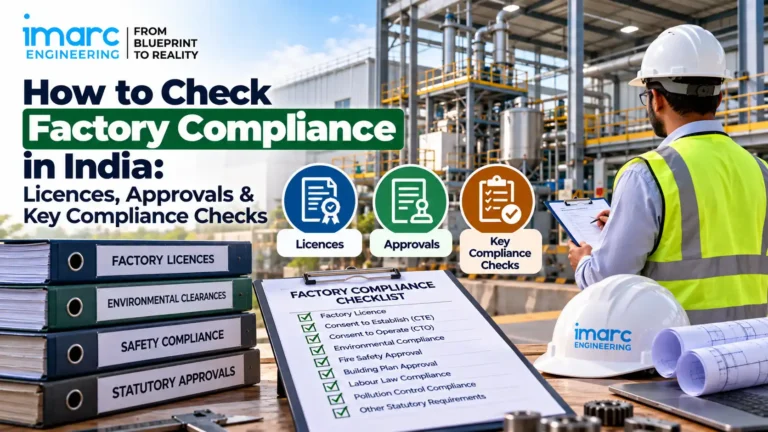
Licences and Regulatory Requirements
Starting a calcium chloride production unit in India requires several approvals:
- Business registration (Proprietorship, LLP, or Private Limited Company)
- Factory Licence under the Factories Act
- Environmental Clearance from the State Pollution Control Board
- GST Registration
- Fire Safety NOC
- Hazardous and chemical compliance for storage and handling of hydrochloric acid and purification chemicals under the Hazardous Chemicals Rules
- Effluent Treatment Plant (ETP) operational clearance
- Occupational Health and Safety compliance
Key Challenges to Consider
High Capital Requirements. Establishing a fully equipped calcium chloride Production plant – with jaw crushers, dissolution tanks, evaporation pans, pelletising drums, and an effluent treatment plant – involves significant capital outlay. Access to term loans, MSME credit-linked subsidies, and state government investment promotion schemes can help bridge funding requirements for promoters with limited equity.
Raw Material Price Volatility. Limestone, which accounts for 60–70% of total OpEx, is subject to fluctuations driven by quarrying costs, transportation expenses, and local supply conditions. Hydrochloric acid prices are linked to chlor-alkali production cycles. Long-term procurement contracts with established suppliers and geographical proximity to limestone deposits are the primary hedging strategies for managing this risk.
High Utility Cost Intensity. Utilities account for 20–25% of total operating expenses – a materially higher proportion than most non-chemical manufacturing operations – due to the energy demands of evaporation and crystallisation processes. Securing reliable and competitively priced electricity, ideally from industrial estates with captive power or open access arrangements, is essential for protecting margins.
Regulatory Compliance. Handling hydrochloric acid and purification chemicals classifies the facility under India’s Manufacture, Storage and Import of Hazardous Chemical Rules. Compliance obligations are extensive, covering safety audits, emergency response plans, hazardous substance reporting, and ongoing ETP monitoring. Dedicated compliance personnel and robust safety management systems are non-negotiable operating requirements.
Competition from Global Players. Established international producers such as Solvay S.A., Tetra Technologies Inc., and Nedmag B.V. set high benchmarks for product purity, consistency, and pricing. Indian manufacturers must compete by leveraging lower landed cost, local supply reliability, and customer-specific grade customisation capabilities.
Skilled Manpower. Operating dissolution tanks, evaporation pans, filtration systems, and pelletising equipment in a corrosive chemical environment requires trained chemical process operators and rigorous safety compliance. Recruiting and retaining skilled plant personnel with relevant chemical manufacturing experience remains a recurring operational challenge in many Indian industrial locations.
Frequently Asked Questions
1. How much does it cost to set up a calcium chloride production plant in India?
Total setup cost depends on plant capacity, location, technology choice, and automation level. Key cost components include land and site development, civil works adapted for acid-resistant construction, process machinery (jaw crushers, evaporation pans, pelletising drums), and pre-operative expenses. A detailed feasibility study is recommended to generate accurate, project-specific cost estimates.
2. Is calcium chloride Production profitable in India in 2026?
Yes. The project delivers strong financial performance, with gross profit margins of 30–40% and net profit margins of 15–25% under normal operating conditions. The global calcium chloride market was valued at USD 1.40 billion in 2025 and is projected to reach USD 2.10 billion by 2034, at a CAGR of 4.53%, with India’s construction, oil and gas, and road maintenance sectors representing fast-growing domestic demand drivers.
3. What machinery is required for a calcium chloride plant in India?
Essential equipment includes jaw crushers, dissolution tanks, filtration units, evaporation pans, pelletising drums, flakers, and packaging machines.
4. What licences and approvals are required to start a calcium chloride plant in India?
Required approvals include business registration, Factory Licence, Environmental Clearance from the State Pollution Control Board, GST Registration, Fire Safety NOC, hazardous chemical compliance under the Hazardous Chemicals Rules, ETP operational clearance, and Occupational Health and Safety compliance.
5. What raw materials are needed for calcium chloride production?
The primary raw materials are limestone, hydrochloric acid, and purification chemicals. Limestone is the dominant cost driver, accounting for 60–70% of total operating expenses.
6. What are the environmental compliance requirements for a calcium chloride plant in India?
The facility must obtain Environmental Clearance, operate an approved ETP, and comply with the Hazardous Chemicals Rules for hydrochloric acid storage and handling. Ongoing effluent monitoring, stack emission reporting, and regular environmental audits are mandatory throughout operations.
7. What is the best location to set up a calcium chloride plant in India?
Locations combining proximity to limestone reserves, hydrochloric acid supply chains, and major construction or oil and gas consumption centres are preferred. Rajasthan, Madhya Pradesh, Gujarat, and Andhra Pradesh are strong candidates given their limestone geology, chemical industry infrastructure, and connectivity to national infrastructure corridors.
8. What is the break-even period for this type of plant in India?
The break-even period depends on plant capacity, total capital investment, product pricing, and capacity utilisation rate. A full financial feasibility analysis covering NPV, IRR, and payback period is the most reliable method for generating project-specific break-even timelines.
9. What government incentives are available for manufacturers in India?
Chemical and industrial manufacturers in India can access the MSME credit-linked capital subsidy scheme, state government investment promotion subsidies and electricity duty exemptions, export promotion benefits administered by the Ministry of Commerce, and infrastructure support available within PCPIR (Petroleum, Chemicals and Petrochemicals Investment Region) clusters in Gujarat, Andhra Pradesh, Odisha, and Rajasthan.
Key Takeaways for Investors
A calcium chloride production plant in India offers a well-rounded and financially grounded investment opportunity anchored by diversified demand across construction, road maintenance, oil and gas, agriculture, food processing, mining, and chemical manufacturing sectors. The project is financially viable across the 50,000 to 200,000 MT annual capacity range, with gross margins of 30–40% and net margins of 15–25% providing a strong return framework for investors at multiple capital scales. According to IMARC Group estimates, the global calcium chloride market is set to grow from USD 1.40 billion in 2025 to USD 2.10 billion by 2034 at a CAGR of 4.53%, and India’s accelerating infrastructure investment, expanding hydrocarbon exploration activity, and environmental dust control regulations position the country as one of the fastest-growing demand centres within this global growth story. With limestone reserves distributed across major Indian states and a regulatory environment actively supporting chemical manufacturing investment, demand sustainability for domestically produced calcium chloride is well-supported across all planning horizons.
About the Author