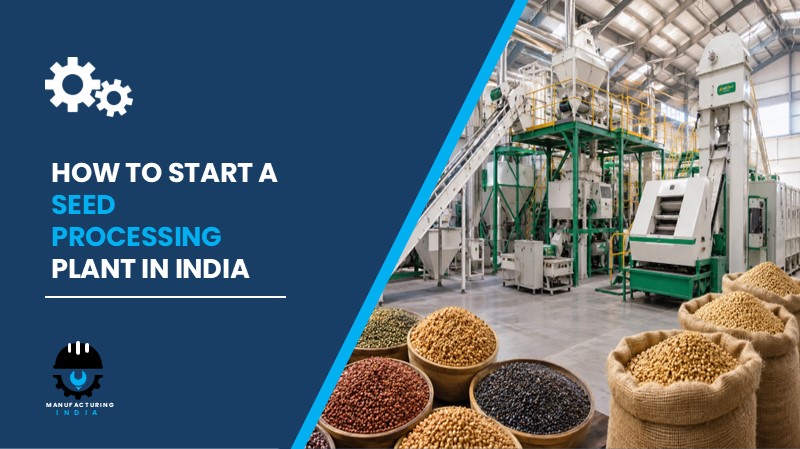
Setting up a seed processing plant in India presents a compelling investment case driven by the country’s vast agricultural base and rapidly expanding demand across agriculture, horticulture, forestry, and landscaping sectors. As food security concerns intensify alongside a growing population, India’s farmers increasingly rely on high-quality, high-yielding, and climate-resilient seed varieties – including hybrid seeds and genetically modified (GM) seeds — to sustain crop productivity. The convergence of technological advances in seed genetics, rising demand for drought-resistant and pest-tolerant varieties, and government-backed agricultural innovation programmes positions seed processing as one of the most strategically important agri-industrial segments in the country today.
India’s strengths as a manufacturing destination further reinforce this opportunity. The country’s deeply rooted agricultural economy, rapid urbanisation, sustained infrastructure investment, and the Make in India initiative collectively create a fertile environment for establishing a seed processing unit. States with strong agri-industrial ecosystems — such as Gujarat, Maharashtra, Uttar Pradesh, and Andhra Pradesh — offer proximity to raw seed supply chains, availability of industrial land, and access to skilled agricultural labour at competitive costs. For domestic and international investors alike, India offers the unique advantage of simultaneously being a production hub and one of the world’s largest end-markets for agricultural seeds.
India’s seed processing sector is underpinned by robust policy support, cost-competitive manufacturing, and structural demand across agriculture, horticulture, and forestry. With gross profit margins ranging between 20–30% and net margins of 8–12%, a well-structured seed processing plant presents a commercially sound investment with viable break-even prospects across multiple capacity scales.
What is Seed Processing?
Seeds are the reproductive units of plants that carry the genetic material required for growing a new plant. They come in several forms, including conventional, hybrid, and genetically modified (GM) varieties. Hybrid seeds are produced by crossing two different parent plants to generate offspring with superior characteristics such as higher productivity or disease resistance, while GM seeds are engineered for specific traits including pest resistance, drought tolerance, or improved yield. Seed manufacturing involves the production of seeds for agricultural, horticultural, and forestry purposes, and encompasses the efficient breeding, selection, production, and packaging of seeds to ensure high quality and optimal growth conditions for plants.
The production process – classified as breeding and selection, field production, harvesting and cleaning, drying and conditioning, processing and treatment, packaging, and quality control — is a multi-step operation involving several unit operations, material handling stages, and quality checks. End-use industries served by a seed processing plant include agriculture, horticulture, forestry, and landscaping, with applications spanning food crops, biofuels, feed crops, and medicinal plants.
Cost of Setting Up a Seed Processing Plant in India
The total investment required for a seed processing plant setup depends on factors including production capacity, technology and automation levels, plant location, infrastructure requirements, and degree of regulatory compliance. A well-structured financial plan covering both capital and operational expenditures is essential for investors seeking accurate projections.
1. Capital Expenditure (CapEx)
The capital investment for a seed processing unit covers several major heads. Land and site development represents a substantial portion of total CapEx, encompassing costs for land acquisition, boundary development, land registration charges, and related site preparation expenses. Setting up within a designated Special Economic Zone (SEZ) or state industrial estate can offer additional benefits such as stamp duty exemptions and faster regulatory clearances. Civil works and construction costs cover the processing shed, raw material storage area, finished goods warehouse, quality control laboratory, effluent treatment infrastructure, and the administrative block.
Machinery and equipment account for the largest share of capital expenditure in a seed processing plant. Key machinery required includes:
- Harvesting equipment
- Cleaning machines
- Sorting and grading machines
- Packaging machinery
- Testing and analysis equipment
Additional capital costs include pre-operative expenses (feasibility studies, consultancy fees), effluent treatment plant (ETP) infrastructure, plant commissioning charges, and import duties applicable to specialised equipment procured internationally.
Request a Sample Report for In-Depth Market Insights: https://www.imarcgroup.com/seed-processing-plant-project-report/requestsample
2. Operational Expenditure (OpEx)
The operating cost structure of a seed processing plant is heavily concentrated in raw material consumption. Raw material costs — comprising raw seeds, cleaning and sorting machinery consumables, treatment chemicals such as fungicides, and packaging bags — account for approximately 80–85% of total OpEx. Securing long-term supplier contracts with reliable raw seed suppliers is recommended to mitigate price volatility and ensure supply chain continuity. Utility costs, covering electricity, water, and steam required across the drying, conditioning, and processing stages, constitute a further 10–15% of operating expenses. Other operating costs include transportation and logistics, packaging materials, salaries and wages, routine machinery maintenance, depreciation on fixed assets, and applicable taxes. By the fifth year of operations, the total operational cost is expected to increase substantially due to factors such as inflation, market fluctuations, supply chain disruptions, and potential rises in the cost of key raw materials.
3. Plant Capacity
The proposed processing facility is designed with an annual processing capacity ranging between 20,000 and 50,000 MT of seeds, enabling economies of scale while maintaining operational flexibility. Capacity parameters can be customised based on individual investor requirements, target market geography, and product mix. As a general principle, profitability improves with higher capacity utilisation, making ramp-up planning and offtake agreements with buyers a critical element of the investment strategy.
4. Profit Margins and Financial Projections
The seed processing plant demonstrates healthy profitability under normal operating conditions. Gross profit margins typically range between 20–30%, supported by stable demand and value-added applications across agriculture and horticulture. Net profit margins are projected at 8–12% on average. Comprehensive financial projections covering Net Present Value (NPV), Internal Rate of Return (IRR), payback period, liquidity analysis, and sensitivity analysis are detailed in the full project report. These projections provide a complete view of financial viability, ROI, and long-term sustainability.
Why Set Up a Seed Processing Plant in India?
High Demand for Food Security. With the global population reaching 8.25 billion in October 2025 and growing by 69 million people in just 12 months, demand for high-yielding and disease-tolerant seeds continues to rise sharply. India, as one of the world’s largest agricultural producers, is at the centre of this demand surge, requiring large volumes of quality seeds to sustain crop productivity across food crops, oilseeds, and commercial crops.
Technological Advancements in Seed Genetics. Advances in gene editing, hybridisation, and genetic modification are continuously enhancing seed performance in terms of yield, disease resistance, and pest tolerance. These innovations have reduced the dependence on pesticides and enhanced crop resilience to environmental stressors, making technologically advanced seed processing a high-value proposition for investors.
Sustainability and Climate Change Resilience. Climate change has led to unpredictable weather patterns and posed growing challenges to conventional farming. This has accelerated demand for drought-resistant, salt-tolerant, and high-yielding seed varieties. A seed processing unit focused on climate-resilient varieties is well-positioned to address this structural shift in agricultural inputs demand.
Policy and Regulatory Tailwinds. In January 2026, India proposed the Seed Act 2026, designed to modernise the country’s seed legislation by ensuring seed quality, boosting transparency, and protecting farmers through a nationwide seed traceability system. The Act mandates registration of seed companies, increases penalties for violations, and strengthens the roles of public institutions — creating a more transparent and investor-friendly regulatory environment for the industry.
Active Industry Investment. In July 2025, DENSO Corporation acquired Axia Vegetable Seeds B.V., a Netherlands-based vegetable seed breeding company, as part of its strategic expansion into the AgriTech sector. This acquisition combined DENSO’s industrial and AI technology with Axia’s cultivation expertise to develop climate-adaptive seeds, signalling strong global capital confidence in the seed processing industry.
Cost-Competitive Processing Base. India offers competitive advantages in land, labour, and supply chain costs compared to other major seed-producing nations. Proximity to abundant raw seed supplies across India’s agricultural heartland states reduces input logistics costs. Government subsidies, incentives, and favourable agricultural policies further support the economics of establishing a seed processing facility in India.
Seed Processing Process – Step by Step
The seed processing process uses breeding and selection, field production, harvesting and cleaning, drying and conditioning, processing and treatment, packaging, and quality control as the primary production method. The key stages of this multi-step operation are outlined below:
- Breeding and Selection: Parent plant varieties are selected and bred for desired traits such as yield, pest resistance, drought tolerance, or disease resistance to develop superior seed genetics.
- Field Production: Selected seed varieties are cultivated under controlled field conditions to produce raw seed material at scale.
- Harvesting and Cleaning: Seeds are harvested from the field using harvesting equipment and passed through cleaning machines to remove impurities, debris, and undersized material.
- Drying and Conditioning: Harvested seeds are subjected to drying processes to reduce moisture content to safe storage levels, followed by conditioning to optimise seed viability.
- Processing and Treatment: Seeds pass through sorting and grading machines for size and weight classification. Treatment chemicals, including fungicides, are applied to protect seeds from disease during storage and post-planting.
- Quality Control: Testing and analysis equipment is used to assess seed purity, germination rates, moisture content, and compliance with quality standards. Documentation for traceability and regulatory compliance is maintained throughout.
- Packaging and Dispatch: Processed seeds are packed using packaging machinery into bags ready for distribution to agriculture, horticulture, forestry, and landscaping end-users.
Key Applications
A seed processing plant serves a broad range of industries and end-use applications, all of which drive consistent and growing demand for quality-processed seeds.
- Agricultural Sector: Farmers use high-quality seeds for cultivating food crops, oilseeds, and other commercial crops, with demand accelerating due to advances in drought-resistant and high-yielding varieties.
- Forestry and Restoration Projects: Seeds are used to restore natural habitats, grow timber crops, and support reforestation and afforestation projects aimed at combating deforestation.
- Biofuel and Industrial Use: Seeds from oilseed crops such as soybeans and canola are cultivated for their oil content, which is processed into biodiesel and other industrial biofuel applications.
- Medicinal Plants: Certain seed categories serve the medicinal plant cultivation segment, meeting growing demand from the pharmaceutical and natural health industries.
Leading Processors
The global seed processing industry is served by several multinational companies with extensive production capacities and diverse application portfolios. Key players operating in this sector include:
- Bayer Crop Science AG
- Corteva
- Syngenta AG
- BASF SE
- Limagrain
- KWS SAAT SE
Timeline to Start the Seed Processing Plant
Establishing a seed processing unit in India typically requires planning across the following phases:
- Feasibility study and project report preparation
- Land acquisition and site development
- Regulatory approvals and environmental clearances
- Factory licence and fire safety compliance
- Machinery procurement and installation
- Raw material supplier agreements and supply chain setup
- Trial production and quality testing
- Commercial production launch
Licences and Regulatory Requirements
Starting a seed processing unit in India requires several approvals:
- Business registration (Proprietorship, LLP, or Pvt Ltd)
- Factory Licence under the Factories Act
- Environmental Clearance from State Pollution Control Board
- GST Registration
- Fire Safety NOC
- Hazardous/Chemical compliance for treatment chemicals including fungicides used in seed treatment
- Effluent Treatment Plant (ETP) operational clearance
- Occupational Health and Safety compliance
Key Challenges to Consider
High Capital Requirements. Establishing a seed processing plant involves significant upfront investment in land, civil construction, and specialised machinery including cleaning machines, sorting and grading machines, and testing and analysis equipment, making adequate project financing essential.
Raw Material Price Volatility. The operating cost structure is heavily dependent on raw seeds and treatment chemicals such as fungicides, which together represent 80–85% of OpEx. Fluctuations in raw seed prices driven by seasonal variation, weather disruptions, or supply chain instability can materially affect margins.
Regulatory Compliance. India’s evolving regulatory landscape — including the proposed Seed Act 2026 — requires ongoing compliance with seed registration, quality certification, traceability systems, and environmental standards. Non-compliance can result in increased penalties under the new legislative framework.
Technology and Innovation Pressure. Rapid advances in gene editing, hybridisation, and GM seed technologies require continuous investment in R&D and production upgrades to maintain competitiveness in a fast-evolving seed market.
Competition from Global Players. The market is dominated by well-capitalised multinational players including Bayer Crop Science AG, Corteva, Syngenta AG, BASF SE, Limagrain, and KWS SAAT SE, creating competitive pressure on pricing, market access, and technology differentiation for new entrants.
Skilled Manpower. Operating a seed processing plant requires specialised skills across seed genetics, agronomy, quality testing, and plant operations. Attracting and retaining qualified technical personnel remains a persistent challenge in this sector.
Frequently Asked Questions
1. How much does it cost to set up a seed processing plant in India?
The total investment depends on plant capacity, technology, location, and automation level. The proposed facility is designed for 20,000–50,000 MT per year. Detailed CapEx and OpEx breakdowns are available in the full project report.
2. Is seed processing profitable in India in 2026?
Yes, the unit demonstrates healthy profitability with gross margins of 20–30% and net margins of 8–12%, supported by stable agricultural demand and value-added applications.
3. What machinery is required for a seed processing plant in India?
Key equipment includes harvesting equipment, cleaning machines, sorting and grading machines, packaging machinery, and testing and analysis equipment.
4. What licences and approvals are required to start a seed processing plant in India?
Investors need business registration, a Factory Licence, environmental clearance, GST registration, a Fire Safety NOC, ETP clearance, and compliance with chemical treatment handling regulations.
5. What raw materials are needed for seed processing?
The primary raw materials are raw seeds, cleaning and sorting consumables, treatment chemicals including fungicides, and packaging bags.
6. What are the environmental compliance requirements for a seed processing plant in India?
Requirements include Environmental Clearance from the State Pollution Control Board, an operational Effluent Treatment Plant (ETP), and compliance with chemical handling and emission standards applicable to treatment chemicals used.
7. What is the best location to set up a seed processing plant in India?
Optimal locations offer proximity to raw seed supply areas, robust transportation and utility infrastructure, access to a skilled agricultural workforce, and compliance with local zoning and environmental regulations. States with strong agri-industrial bases are well suited.
8. What is the break-even period for this type of plant in India?
The break-even period is detailed in the full project report through a comprehensive financial analysis covering NPV, IRR, payback period, and sensitivity analysis based on realistic capacity utilisation assumptions.
9. What government incentives are available for processors in India?
Government initiatives include agricultural innovation subsidies, incentives under Make in India, and the proposed Seed Act 2026 framework that supports registered seed companies through a transparent regulatory environment and strengthened institutional roles.
Key Takeaways for Investors
A seed processing plant in India represents a robust investment opportunity anchored by structural demand from agriculture, horticulture, forestry, and landscaping sectors, all of which require continuous access to high-quality, technologically advanced seeds. The facility demonstrates financial viability across the 20,000–50,000 MT annual capacity range, with gross margins of 20–30% and net margins of 8–12% confirming sound profitability under normal operating conditions. The global seed market, valued at USD 46.70 billion in 2025, is projected to reach USD 53.20 billion by 2034 at a CAGR of 1.5%, signalling sustained long-term demand growth for processed seeds. Combined with India’s evolving policy framework under the Seed Act 2026, cost-competitive manufacturing environment, and growing emphasis on climate-resilient and high-yielding seed varieties, the demand outlook for this investment remains durable and compelling for the foreseeable future.
About the Author