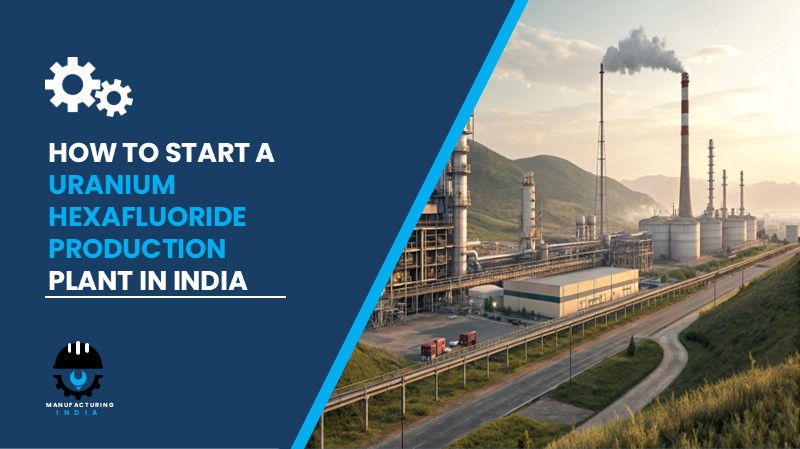
Setting up a uranium hexafluoride production plant in India presents a compelling investment case driven by the country’s accelerating push toward clean, low-carbon energy. Uranium hexafluoride (UF6) is an indispensable intermediate in the nuclear fuel cycle, serving critical roles in isotope separation, nuclear fuel production, and reactor fuel fabrication. As India scales its nuclear power ambitions to meet surging electricity demand and achieve energy security, the domestic requirement for enriched uranium — and the compounds that enable its production — is positioned to grow substantially. The nuclear power generation sector, along with advanced research reactor applications and the emerging small modular reactor segment, collectively constitute the primary demand drivers for this strategically vital compound.
India’s structural advantages make it a strategically sound destination for this production. The country offers a cost-competitive production environment, access to a growing scientific and technical workforce, and robust policy backing through the Make in India initiative, which encourages domestic production of high-value industrial and energy materials. States such as Gujarat, Maharashtra, and Rajasthan — home to existing nuclear infrastructure and industrial corridors — present viable locations for establishing a uranium hexafluoride facility, given their proximity to logistics networks, utilities, and regulatory frameworks that support advanced chemical production. India’s ambition to diversify its energy portfolio and achieve energy independence further reinforces the long-term commercial rationale for this investment.
Investing in a uranium hexafluoride production plant in India offers a strategically compelling opportunity supported by government policy tailwinds, cost-competitive operations, and robust demand from the nuclear power, isotope separation, and reactor fuel fabrication sectors. With the global pivot toward clean energy accelerating the expansion of nuclear programs, the financial viability of this plant — including favourable margins, clear payback potential, and strong NPV — makes it a credible long-term venture for serious industrial investors.
What is Uranium Hexafluoride?
Uranium hexafluoride is a chemical compound of paramount significance in the nuclear industry, formed by combining uranium with six fluoride ions. Its unique physical and chemical properties enable it to endure the extreme conditions necessary for isotope separation and nuclear fuel preparation. A defining characteristic of UF6 is its ability to exist as a gas at relatively low pressures and temperatures, which crucially aids in its application in both centrifuge and gas diffusion methods of uranium enrichment — the two primary production processes used globally for generating enriched uranium from natural uranium feedstocks.
The compound’s chemical properties make it the optimal intermediate for uranium enrichment methods, as these processes require a substance capable of transitioning between physical states in a controlled manner, enabling precise separation of uranium-235 from uranium-238. Beyond enrichment, uranium hexafluoride plays a pivotal role in reactor fuel fabrication and acts as a precursor for various uranium-based compounds. The compound is subject to rigorous safety protocols during its handling, transportation, and processing, given its reactive nature and the radioactive properties of uranium. Its end-use industries include nuclear power generation, research reactor operations, reactor fuel fabrication, isotope separation facilities, and next-generation reactor programs including small modular reactors.
Cost of Setting Up a Uranium Hexafluoride Production Plant in India
The total investment required for a uranium hexafluoride production plant depends on several interdependent variables, including plant capacity, the technology configuration adopted, geographic location, degree of process automation, and the extent of regulatory compliance infrastructure installed. Investors should approach cost planning across both capital expenditure and operational expenditure dimensions to arrive at a realistic financial baseline.
1. Capital Expenditure (CapEx)
Land and Site Development constitutes one of the foundational cost heads for this facility. Given the hazardous and radioactive nature of UF6, the plant must be sited within a designated industrial zone or special economic zone (SEZ) with adequate buffer distances, security perimeters, and environmental clearance provisions. Site selection analysis — as outlined in IMARC Group’s project report — encompasses proximity to supply chains, infrastructure access, environmental impact assessment, and phased development planning, all of which influence land acquisition costs significantly.
Civil works and construction encompass the erection of the main process building, laboratory and quality control block, chemical storage and handling areas, administrative offices, worker safety facilities, and the effluent treatment infrastructure. Given the classification of this production as a hazardous chemical process, civil construction standards are materially higher than a standard production shed, driving up per-square-metre costs and extending construction timelines.
Machinery and equipment represent the largest single capital cost component. Key machinery required includes:
- Fluorination reactors
- Centrifuge or gas diffusion separation units
- Condensation and solidification systems
- Distillation and purification columns
- Storage and transport cylinders (pressure-rated, corrosion-resistant)
- Material handling and transfer systems
- Quality assurance and analytical instrumentation
- Safety and containment systems (leak detection, emergency shutdown systems)
- Effluent treatment and waste management equipment
Other capital costs include pre-operative expenses, commissioning and trial-run costs, import duties on specialised equipment not produced domestically, and contingency provisions for compliance-related capital additions mandated during regulatory inspections.
Request a Sample Report for In-Depth Market Insights: https://www.imarcgroup.com/uranium-hexafluoride-manufacturing-plant-project-report/requestsample
2. Operational Expenditure (OpEx)
Raw material cost is the dominant recurring expenditure. The primary inputs for this production unit are uranium — sourced in the form of uranium ore concentrate or uranium oxide — and high-purity fluorine or hydrogen fluoride feedstocks. Given the volatility in global uranium commodity markets and the tightly regulated nature of fluorine sourcing, establishing long-term supplier contracts with price-stabilisation provisions is essential to maintaining predictable production costs. The report covers detailed raw material requirements, procurement strategies, and cost modelling over a five-year projection horizon, accounting for the progressive cost escalations that characterise chemical raw material markets over time.
Utility costs — including electricity for process equipment and safety systems, water for cooling and effluent treatment, and steam for thermal processes — constitute a meaningful share of the operating cost base. Labour and human resource costs encompass scientific and engineering personnel, safety officers, compliance personnel, and plant operators — a workforce profile that commands premium compensation relative to standard chemical production. Other operating costs include transportation and logistics, specialised packaging for UF6 cylinders, ongoing maintenance and calibration of precision equipment, insurance, depreciation, and applicable taxes and levies under the Indian regulatory framework.
3. Plant Capacity
Plant capacity for a uranium hexafluoride production facility is determined by the scale of the enrichment program it is designed to serve and the downstream demand volume of the nuclear fuel cycle it feeds. IMARC Group’s project report provides a capacity example and industry benchmark that investors can use as a reference point, and the report explicitly notes that plant capacity can be customised per investor requirements. As with most process production facilities, profitability and unit economics improve materially with higher capacity utilisation, making it important for investors to plan capacity in alignment with confirmed offtake arrangements or government supply agreements.
4. Profit Margins and Financial Projections
The financial projections for a uranium hexafluoride production plant in India encompass a comprehensive set of metrics including Net Present Value (NPV), Internal Rate of Return (IRR), payback period, gross profit margin, and net profit margin — all modelled across a five-year income and expenditure projection. IMARC Group’s project report covers detailed profitability analysis, liquidity analysis, sensitivity analysis, and uncertainty modelling to equip investors with a robust financial decision framework. Gross and net margins are tracked year-on-year as the plant progresses from initial commissioning through to full-capacity commercial production, with the financial model reflecting taxation, depreciation, and fixed versus variable cost dynamics across the projection period.
Why Set Up a Uranium Hexafluoride Plant in India?
Growing Global Demand for Clean and Reliable Energy. The growing global demand for clean and reliable energy sources has intensified interest in nuclear power as a low-carbon option. This drives demand for enriched uranium, thereby directly increasing the requirement for uranium hexafluoride in the enrichment process — creating a durable, long-horizon pull for UF6 production capacity.
Expansion of Nuclear Power Programs in Emerging Economies. Developing countries, including India, are actively seeking to diversify their energy portfolios and achieve energy security by expanding their nuclear power programs. This drives the need for domestic nuclear fuel production capability, making a local UF6 facility a strategically aligned investment with national energy policy objectives.
Advancements in Reactor Technology and Fuel Cycle Innovation. Next-generation reactors, including small modular reactors and advanced fuel designs, are reshaping the requirements for enriched uranium. These innovations could alter the specifications and volumes of uranium hexafluoride required, opening new market segments and creating demand tailwinds for producers positioned in growth markets.
Policy and Regulatory Tailwinds. India’s Make in India initiative actively encourages domestic production of industrial and energy-sector materials, reducing import dependency and supporting capital investment in advanced production. This policy environment, combined with government energy security imperatives, creates a favourable backdrop for nuclear-related industrial investment.
Cost-Competitive Production Environment. India offers compelling cost advantages across land, construction, and operational labour relative to established nuclear production economies. The country’s growing supply chain infrastructure and access to technical expertise in chemistry, materials science, and nuclear engineering further strengthen its position as a viable production base for this facility.
Geopolitical and Non-Proliferation Dynamics. Global geopolitical factors and nuclear non-proliferation efforts directly impact UF6 trade and regulation. Countries seeking to reduce dependence on geopolitically sensitive supply chains for nuclear materials are increasingly motivated to develop domestic production capabilities — a trend that strengthens the long-term investment case for a locally established uranium hexafluoride production unit.
Production Process – Step by Step
The uranium hexafluoride production process uses fluorination-based chemical synthesis followed by gas diffusion or centrifuge-based enrichment methods as the primary production approach. The process transforms uranium feedstocks into a gaseous compound suitable for isotope separation and subsequent fuel fabrication.
- Uranium Feedstock Preparation: Raw uranium ore concentrate or uranium oxide is received, inspected, and prepared for chemical conversion into a form compatible with fluorination.
- Fluorination Reaction: The prepared uranium material is reacted with fluorine or hydrogen fluoride in a controlled fluorination reactor to form crude uranium hexafluoride.
- Purification and Distillation: The crude UF6 is subjected to distillation and purification processes to remove impurities and achieve the specification-grade compound required for enrichment.
- Condensation and Solidification: The gaseous UF6 is condensed and solidified under controlled temperature and pressure conditions for safe intermediate storage and handling.
- Isotope Separation (Enrichment): Specification-grade UF6 is processed through centrifuge or gas diffusion separation units to achieve the required uranium-235 enrichment levels for nuclear fuel.
- Quality Assurance and Technical Testing: Each production batch undergoes rigorous quality assurance testing against defined criteria to confirm isotopic composition, purity, and compliance with nuclear-grade specifications.
- Filling, Packaging, and Dispatch: The enriched UF6 is transferred into pressure-rated, corrosion-resistant cylinders and dispatched to reactor fuel fabrication facilities, research reactors, or downstream nuclear fuel cycle operations.
Key Applications
Uranium hexafluoride serves a range of critical end-use industries within the nuclear sector, each demanding precise isotopic purity and strict safety compliance.
- Nuclear Power Generation: UF6 is the essential intermediate in producing enriched uranium fuel for commercial nuclear power reactors, supporting low-carbon electricity generation.
- Isotope Separation Facilities: The compound’s gaseous properties at low pressures make it the preferred feedstock for centrifuge and gas diffusion enrichment plants globally.
- Reactor Fuel Fabrication: UF6 acts as a direct precursor in the fabrication of nuclear fuel rods and assemblies used in both commercial and research reactors.
- Research Reactors: Enriched uranium derived from UF6 processing fuels research and experimental reactors used for scientific studies, medical isotope production, and neutron research.
- Small Modular Reactors (SMRs): Next-generation reactor designs, including SMRs, rely on enriched uranium inputs that originate from the UF6 enrichment process.
- Uranium-Based Compound Production: UF6 serves as a chemical precursor for various downstream uranium compounds used in nuclear technology applications.
Leading Producers
The global uranium hexafluoride market is served by a specialised set of entities operating within tightly regulated nuclear industry frameworks. The source report covers the competitive landscape and key player structure of the global UF6 market. Investors seeking a detailed competitive benchmarking analysis — including key player identification, capacity data, and strategic positioning — are encouraged to access the full IMARC Group project report for this information.
Timeline to Start the Plant
Establishing a uranium hexafluoride production plant in India involves a phased development process that spans multiple regulatory and operational milestones:
- Feasibility study and project report preparation
- Land acquisition and site development
- Regulatory approvals and environmental clearances
- Factory licence and fire safety compliance
- Machinery procurement and installation
- Raw material supplier agreements and supply chain setup
- Trial production and quality testing
- Commercial production launch
Licences and Regulatory Requirements
Starting a uranium hexafluoride production unit in India requires several approvals, given the compound’s classification as both a hazardous chemical and a nuclear material subject to international safeguards:
- Business registration (Proprietorship, LLP, or Pvt Ltd)
- Factory Licence under the Factories Act
- Environmental Clearance from the State Pollution Control Board
- GST Registration
- Fire Safety NOC
- Hazardous and chemical compliance clearances under applicable chemical safety regulations
- Atomic Energy Regulatory Board (AERB) licensing for nuclear material handling
- Effluent Treatment Plant (ETP) operational clearance
- Occupational Health and Safety compliance
Key Challenges to Consider
High Capital Requirements. The combination of specialised process equipment, nuclear-grade safety infrastructure, and stringent civil construction standards makes the initial capital outlay for this facility substantially higher than a standard chemical plant, requiring patient, long-horizon capital commitments.
Raw Material Price Volatility. The cost of uranium — the primary feedstock — is subject to global commodity price fluctuations driven by geopolitical developments, mining output changes, and nuclear policy shifts in major economies, creating margin pressure during high-price cycles.
Regulatory Compliance. Operating a uranium hexafluoride facility in India requires compliance with an exceptionally broad regulatory framework spanning atomic energy law, environmental regulation, hazardous chemical safety standards, and international nuclear safeguards — demanding significant ongoing compliance investment.
Technology and Innovation Pressure. Advancements in reactor technology, including the development of small modular reactors and next-generation fuel designs, may alter enrichment specifications and UF6 processing requirements, necessitating capital reinvestment to maintain technical relevance.
Competition. The global UF6 market is served by a limited number of technically specialised and heavily regulated entities. New entrants must demonstrate technical competence, safety standards compliance, and supply reliability to compete for offtake agreements in this relationship-driven market.
Skilled Manpower. Operating a nuclear-grade chemical production facility requires a workforce with specialised expertise in nuclear chemistry, isotope processing, radiation safety, and process engineering — a talent profile that is scarce and commands premium compensation in India.
Frequently Asked Questions
1. How much does it cost to set up a uranium hexafluoride production plant in India?
The total setup cost depends on plant capacity, technology configuration, location, automation level, and regulatory compliance infrastructure. IMARC Group’s project report provides a detailed CapEx and OpEx breakdown customised to investor requirements.
2. Is uranium hexafluoride production profitable in India in 2026?
Yes, this production presents a viable profitability case, supported by growing nuclear energy demand, domestic energy security imperatives, and the Make in India policy environment. Profitability improves meaningfully with higher plant capacity utilisation and long-term offtake agreements.
3. What machinery is required for a uranium hexafluoride production plant in India?
Key equipment includes fluorination reactors, centrifuge or gas diffusion separation units, condensation and solidification systems, distillation and purification columns, pressure-rated storage cylinders, safety and containment systems, and effluent treatment equipment.
4. What licences and approvals are required to start a uranium hexafluoride production plant in India?
Required approvals include business registration, Factory Licence, Environmental Clearance, GST registration, Fire Safety NOC, AERB licensing for nuclear material, hazardous chemical compliance, ETP clearance, and occupational health and safety compliance.
5. What raw materials are needed for uranium hexafluoride production?
The primary raw materials are uranium – typically in the form of uranium ore concentrate or uranium oxide — and high-purity fluorine or hydrogen fluoride feedstocks for the fluorination reaction process.
6. What are the environmental compliance requirements for a uranium hexafluoride production plant in India?
The facility must obtain Environmental Clearance from the State Pollution Control Board, maintain an operational Effluent Treatment Plant, comply with hazardous waste handling regulations, and operate in accordance with Atomic Energy Regulatory Board environmental and radiation safety standards.
7. What is the best location to set up a uranium hexafluoride production plant in India?
Locations within designated industrial zones or SEZs in states with existing nuclear infrastructure and industrial corridors — such as Gujarat, Maharashtra, or Rajasthan — offer strategic advantages including logistics access, utility availability, and proximity to regulatory authorities.
8. What is the break-even period for this type of plant in India?
The break-even period depends on plant scale, product pricing, capacity utilisation, and financing structure. IMARC Group’s financial model covers payback period analysis, NPV, and IRR across a five-year projection to help investors determine break-even timelines with precision.
9. What government incentives are available for producers in India?
Indian producers can potentially benefit from Make in India scheme incentives, industrial cluster development subsidies, state-level capital investment subsidies, and financing support from development finance institutions for strategic industrial projects.
Key Takeaways for Investors
A uranium hexafluoride production plant in India represents a high-barrier, high-strategic-value investment opportunity driven by sustained demand from nuclear power generation, isotope separation, reactor fuel fabrication, research reactors, and the emerging small modular reactor segment. The investment demonstrates financial viability across a range of plant capacities, with profitability metrics — including NPV, IRR, gross margin, net margin, and payback period — all modelled comprehensively in IMARC Group’s 2026 project report. The growing global demand for clean and reliable energy sources has intensified interest in nuclear power as a low-carbon option, directly sustaining and amplifying the downstream requirement for enriched uranium and, consequently, for uranium hexafluoride production capacity. As India accelerates its nuclear energy program and emerging economies expand their nuclear fuel cycle capabilities, demand for this essential intermediate is positioned to remain structurally robust for the foreseeable future.
About the Author