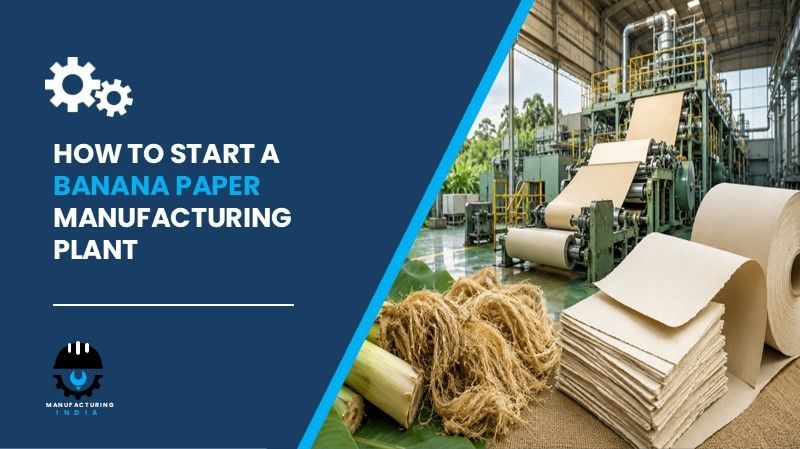
Setting up a banana paper manufacturing plant in India presents a compelling investment case driven by surging demand across printing, packaging, creative arts, specialty publishing, eco-friendly products, and event materials. As environmental regulations tighten around deforestation-based paper and single-use plastics, banana paper – produced from the agricultural waste of banana plant pseudo-stems – is emerging as a commercially viable, tree-free alternative. India’s vast banana cultivation base, combined with growing corporate adoption of sustainable packaging and eco-stationery, creates a foundational demand that makes this investment timely and strategically sound.
India’s advantages in this segment are substantial. The country’s rapid urbanisation, expanding infrastructure, and the Make in India initiative collectively create a supportive ecosystem for agro-based manufacturing. States with high banana cultivation density offer localized raw material sourcing, reducing dependence on imported wood pulp and stabilising supply chain costs. For investors looking to align with megatrends in green branding and circular economy manufacturing, India offers both the agricultural feedstock advantage and the policy environment needed to build a scalable, profitable operation.
Setting up a banana paper manufacturing plant in India combines policy support, cost-competitive agro-waste sourcing, and strong demand from packaging and specialty paper sectors. With gross margins of 45-55% and net profit margins of 20-25%, this plant type offers compelling financial viability. Growing regulatory support for biodegradable materials and India’s banana cultivation depth make break-even achievable and demand sustainable over the long term.
What is Banana Paper?
Banana paper, also known as banana skin paper or banana plant paper, is an environmental paper made from the banana plant pseudo-stem fibres – an agricultural waste material created as a by-product of the banana fruit harvest. The banana plant fibres are highly cellulose in nature, giving the resultant paper high tensile strength, durability, and strong biodegradability. Unlike conventional wood-based paper, banana paper does not require cutting trees, supporting environmental conservation through sustainable practices and the utilisation of biomass from agricultural waste.
Through appropriate processing techniques, banana paper can be blended with recycled paper or natural fibres to achieve high printing efficiency and meet specific end-use quality standards. The primary production method used is pulping, sheet forming, pressing, and drying – a multi-stage process that converts raw pseudo-stem fibre into finished paper sheets suitable for commercial and artisanal applications.
The product serves a wide range of end-use industries including printing, packaging, creative arts, specialty publishing, eco-friendly products, and event materials. Applications span book covers, gift wrapping, artisanal crafts, journal paper, sustainable packaging, and decorative stationery – making it relevant to both industrial buyers and the fast-growing premium handmade paper segment.
Cost of Setting Up a Banana Paper Manufacturing Plant in India
The cost of establishing a banana paper manufacturing plant depends on several variables including plant capacity, technology selection, geographic location, level of automation, and regulatory compliance requirements. Below is a detailed breakdown of both capital and operational expenditures relevant to the Indian context.
1. Capital Expenditure (CapEx)
Land and Site Development – forms a substantial part of total capital investment, covering land registration charges, boundary development, and related site preparation expenses. Investors in India can consider locating within Special Economic Zones (SEZs) or state-designated industrial estates to avail of concessional land rates and infrastructure support available under central and state government schemes.
Civil Works and Construction cost – cover the manufacturing shed, quality control laboratory, raw material storage area, finished goods warehouse, and administrative block. Building specifications must account for humidity and moisture control given the wet nature of pulp-based paper processing.
Machinery and Equipment cost – represent the largest portion of total CapEx. Key machinery required includes:
- Fibre extractors
- Pulping digesters
- Beaters or refiners
- Sheet-forming vats or paper machines
- Hydraulic presses
- Drying systems
- Calenders for finishing
- Cutting or packaging machines
Other Capital Cost – include the installation of an Effluent Treatment Plant (ETP), pre-operative expenses, commissioning costs, and import duties applicable on specialised machinery components where domestic alternatives are unavailable.
Request a Sample Report for In-Depth Market Insights: https://www.imarcgroup.com/banana-paper-manufacturing-plant-project-report/requestsample
2. Operational Expenditure (OpEx)
Raw Material Cost – is the dominant operating expense driver for this facility. Banana fibre – the primary raw material – accounts for approximately 40-50% of total operating expenditure. Securing long-term supply contracts directly with banana-growing farm clusters or farmer cooperatives is strongly recommended to stabilise input costs and ensure consistent fibre quality and availability throughout the production calendar.
Utility Cost – covering electricity, water, and steam – constitutes 25-30% of total OpEx, reflecting the energy-intensive nature of pulping and drying operations. Transportation costs, packaging costs, salaries and wages, depreciation, taxes, and other recurring expenses constitute the remaining share of annual operating expenditure. By the fifth year of operations, total operational costs are projected to increase substantially due to inflation, market fluctuations, potential rises in the cost of key raw materials, supply chain disruptions, rising consumer demand, and shifts in the global economy.
3. Plant Capacity
The proposed manufacturing facility is designed with an annual production capacity ranging between 1,000 and 3,000 MT, enabling economies of scale while maintaining operational flexibility. Capacity can be customized based on individual investor requirements and target market size. As with all manufacturing operations, profitability improves meaningfully with higher capacity utilisation, and investors are advised to plan for staged ramp-up to full capacity within the first two to three years of commercial operations.
4. Profit Margins and Financial Projections
The banana paper manufacturing plant project demonstrates healthy profitability under normal operating conditions. Gross profit margins typically range between 45-55%, supported by stable demand and the value-added nature of eco-friendly paper applications. Net profit margins are projected at 20-25% on an average basis across operating years. A comprehensive financial analysis covering NPV (Net Present Value), IRR (Internal Rate of Return), payback period, liquidity analysis, and sensitivity analysis is available through the detailed project report. These projections are built on realistic assumptions relating to capital investment, operating costs, production capacity utilisation, pricing trends, and demand outlook.
Why Set Up a Banana Paper Plant in India?
Sustainable Materials Demand and Circular Economy Growth: Banana paper utilises agricultural waste from banana pseudo-stems – converting a discarded by-product into value-added, eco-friendly paper. India’s large banana cultivation base ensures a consistent and cost-effective supply of this raw material, directly supporting circular economy manufacturing at scale.
Megatrend Alignment with Green Packaging and Eco-Branding: Increasing global demand for green packaging, plastic substitutes, green stationery, and green branding is driving adoption of biodegradable and tree-free papers. Rising environmental awareness among both consumers and corporations is accelerating the shift away from conventional wood-based paper, creating durable demand for banana paper across premium and industrial segments.
Policy and Regulatory Tailwinds: Government initiatives promoting waste utilisation, sustainable manufacturing, MSME development, and green products – combined with bans on single-use plastics and growing regulatory pressure on deforestation-based paper – indirectly but powerfully support demand for banana paper and other agro-based paper solutions. The Make in India initiative further incentivises domestic manufacturing investment in this segment.
Cost-Competitive Manufacturing Fundamentals: India’s lower land acquisition costs, competitive labour rates, and proximity to banana-growing agricultural regions create a structurally cost-competitive environment. Localized sourcing of banana fibre reduces dependence on imported wood pulp, shortens supply chains, and creates pricing advantages for Indian manufacturers serving both domestic and export markets.
Strong Agricultural Raw Material Base: According to the Ministry of Agriculture and Farmers Welfare, banana is cultivated in more than 130 countries worldwide across 5.00 million hectares, yielding 103.63 million tonnes of banana and plantain globally. India is among the leading banana-producing nations, providing manufacturers with abundant, affordable, and locally sourced feedstock for uninterrupted production.
Local Supply Chain Preference and Export Opportunity: The expanding handmade and specialty paper segment contributes significantly to demand, particularly in premium and export-oriented markets. Packaging and printing companies, corporate gifting brands, and eco-stationery exporters increasingly prefer locally sourced sustainable paper, creating a reliable domestic customer base alongside export growth prospects.
Manufacturing Process – Step by Step
The banana paper manufacturing process uses pulping, sheet forming, pressing, and drying as the primary production method. The process is a multi-step operation involving several unit operations, material handling stages, and quality checks at each stage.
- Banana Fibre Extraction: Raw banana pseudo-stems are collected and processed through fibre extractors to separate the cellulose-rich fibres from the outer skin and moisture content.
- Cleaning and Preparation: Extracted fibres are cleaned to remove impurities, dirt, and excess moisture before being introduced into the pulping stage.
- Pulping: Cleaned banana fibres are fed into pulping digesters where they are broken down into a homogeneous pulp slurry using water and mechanical or chemical action.
- Beating and Refining: The pulp is passed through beaters or refiners to achieve the desired fibre consistency, sheet-forming quality, and surface properties for the final paper grade.
- Sheet Formation: The refined pulp slurry is introduced into sheet-forming vats or paper machines, where it is spread evenly and shaped into flat paper sheets.
- Pressing: Formed sheets are processed through hydraulic presses to remove excess water and consolidate the fibre structure, improving paper density and strength.
- Drying: Pressed sheets are passed through drying systems to remove residual moisture and achieve the target dry weight and tensile specifications.
- Finishing and Calendering: Dried paper sheets pass through calenders for surface finishing, smoothness, and thickness uniformity required for printing, packaging, or specialty applications.
- Cutting, Packaging, and Dispatch: Finished sheets are cut to standard sizes, packaged, and dispatched to end-use industries including printing, packaging, creative arts, specialty publishing, eco-friendly product manufacturers, and event materials suppliers.
Key Applications
Banana paper serves a diverse range of industries, with applications spanning both industrial and artisanal end-use sectors:
- Printing: Used as an eco-friendly printable paper grade for stationery, brochures, and specialty printed materials.
- Packaging: Sustainable paper-based packaging, cartons, and eco-friendly wrapping products for consumer goods and food segments.
- Creative Arts: Handmade paper for artisanal crafts, decorative paper, and gift wrapping applications.
- Specialty Publishing: Journal paper, book covers, and niche publishing products targeting the premium and sustainable publishing segment.
- Eco-Friendly Products: Biodegradable stationery and paper-based products aligned with corporate sustainability commitments.
- Event Materials: Sustainable invitations, event branding materials, and decorative applications for the events and wedding industry.
Leading Manufacturers
The global banana paper industry is served by a combination of specialty manufacturers and eco-paper innovators operating across tropical and subtropical production regions. Key players in the global market include:
- Green Banana Paper
- Ananta Banana Paper
- Kanaf Paper Line
- TreeZero (banana fibre-based paper initiatives)
- Charta Banana Paper
- EcoPaper India
Timeline to Start the Plant
- Feasibility study and project report preparation
- Land acquisition and site development
- Regulatory approvals and environmental clearances
- Factory licence and fire safety compliance
- Machinery procurement and installation
- Raw material supplier agreements and supply chain setup
- Trial production and quality testing
- Commercial production launch
Licences and Regulatory Requirements
Starting a banana paper manufacturing unit in India requires several approvals:
- Business registration (Proprietorship, LLP, or Private Limited Company)
- Factory Licence under the Factories Act
- Environmental Clearance from the State Pollution Control Board
- GST Registration
- Fire Safety NOC
- Effluent Treatment Plant (ETP) operational clearance
- Occupational Health and Safety compliance
Key Challenges to Consider
High Capital Requirements: The initial capital investment – covering land, civil construction, and specialised machinery including fibre extractors, pulping digesters, hydraulic presses, and drying systems – represents a significant upfront commitment that requires robust financial planning and phased funding strategy.
Raw Material Price Volatility: Banana fibre, the primary raw material, is subject to seasonal agricultural variability and supply chain disruptions. Long-term sourcing contracts and diversified supplier networks are essential to managing cost fluctuations and maintaining production continuity.
Regulatory Compliance: Environmental clearances, ETP operational requirements, and compliance with the Factories Act involve time and investment. Navigating state-specific pollution control regulations requires dedicated legal and compliance resources, particularly for effluent management in wet pulping operations.
Technology and Innovation Pressure: The banana paper segment requires specialized fibre extraction, pulping know-how, quality consistency, and continuous process optimisation. Maintaining expertise in handling natural fibres and delivering uniform paper properties is essential for competing in quality-sensitive markets.
Competition from Established Players: The market is served by established global players including Green Banana Paper, Ananta Banana Paper, Kanaf Paper Line, TreeZero, Charta Banana Paper, and EcoPaper India. New entrants must differentiate on quality, pricing, or geographic market focus to carve a sustainable position.
Skilled Manpower: Operating pulping digesters, sheet-forming equipment, and quality control systems requires trained personnel familiar with agro-fibre processing. Recruiting, training, and retaining skilled technicians in semi-urban or rural locations near banana cultivation zones may present an ongoing operational challenge.
Frequently Asked Questions
1. How much does it cost to set up a banana paper manufacturing plant in India?
The total cost depends on plant capacity (ranging between 1,000-3,000 MT per year), technology level, location, and automation. Capital costs cover land, civil works, machinery (including fibre extractors, pulping digesters, hydraulic presses, and drying systems), and ETP installation.
2. Is banana paper manufacturing profitable in India in 2026?
Yes. The banana paper manufacturing plant project demonstrates gross profit margins of 45-55% and net profit margins of 20-25% under normal operating conditions, supported by stable demand and increasing adoption of eco-friendly paper products.
3. What machinery is required for a banana paper plant in India?
Key machinery includes fibre extractors, pulping digesters, beaters or refiners, sheet-forming vats or paper machines, hydraulic presses, drying systems, calenders for finishing, and cutting or packaging machines.
4. What licences and approvals are required to start a banana paper plant in India?
Required approvals include business registration, a Factory Licence under the Factories Act, Environmental Clearance from the State Pollution Control Board, GST Registration, Fire Safety NOC, ETP operational clearance, and Occupational Health and Safety compliance.
5. What raw materials are needed for banana paper manufacturing?
The primary raw material is banana fibre, sourced from banana plant pseudo-stems – an agricultural waste by-product of the banana fruit harvest. Banana fibre accounts for 40-50% of total operating expenditure.
6. What are the environmental compliance requirements for a banana paper plant in India?
The facility must obtain Environmental Clearance from the State Pollution Control Board and maintain an operational Effluent Treatment Plant (ETP) to manage processed wastewater. Compliance with national and state-level emission and effluent standards is mandatory.
7. What is the best location to set up a banana paper plant in India?
Ideal locations are those with proximity to banana cultivation regions for cost-effective raw material sourcing, access to reliable infrastructure and utilities, and availability of skilled labour. Industrial estates and SEZ locations can further reduce setup costs and improve regulatory clearance timelines.
8. What is the break-even period for this type of plant in India?
The break-even period is detailed in the project’s financial analysis, which covers payback period, NPV, and IRR based on plant capacity utilisation, pricing trends, and operating cost structure.
9. What government incentives are available for manufacturers in India?
Government initiatives promoting waste utilisation, sustainable manufacturing, MSME development, and green product adoption – combined with the Make in India initiative – provide policy support for agro-based paper manufacturers. SEZ-based setups and state industrial policies may also offer capital subsidy, power tariff concessions, and GST incentives.
Key Takeaways for Investors
The banana paper manufacturing plant in India offers a compelling, future-aligned investment opportunity driven by robust demand across printing, packaging, creative arts, specialty publishing, eco-friendly products, and event materials. Financial viability is strong across the 1,000-3,000 MT per year capacity range, with gross margins of 45-55% and net profit margins of 20-25% providing a commercially attractive return profile. The global banana paper market was valued at USD 156.5 million in 2025 and is projected by IMARC Group to reach USD 292.6 million by 2034, growing at a CAGR of 7.2% from 2026 to 2034. With regulatory momentum behind biodegradable materials, expanding corporate sustainability commitments, and India’s deep agricultural base in banana cultivation, demand for domestically produced banana paper is positioned to grow sustainably through the decade ahead.
About the Author