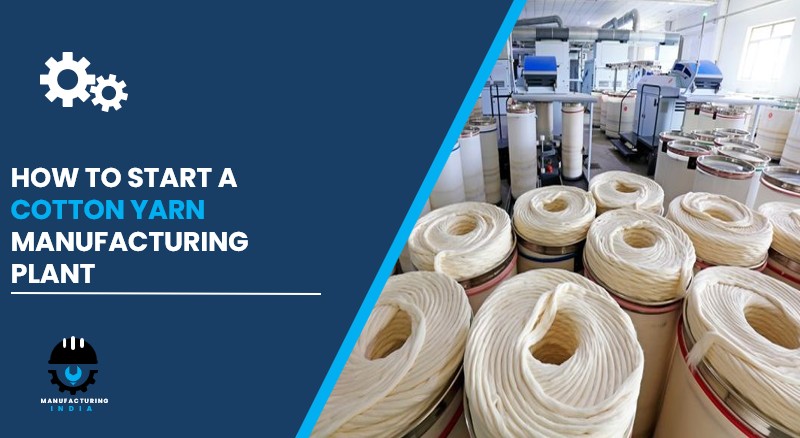
Setting up a cotton yarn manufacturing plant in India represents a compelling investment opportunity driven by the sustained demand from the global textile and apparel industry, rising preference for natural and breathable fabrics, and growing consumption of cotton-based products across domestic and export markets. As environmental consciousness rises and fast fashion gives way to durable, sustainable alternatives, cotton yarn’s natural, biodegradable, and breathable characteristics are positioning it at the forefront of the global fibre market.
The global cotton yarn market was valued at USD 84.56 Billion in 2025 and is projected to reach USD 137.73 Billion by 2034, exhibiting a CAGR of 5.57% from 2026 to 2034, according to IMARC Group estimates. This steady growth trajectory, underpinned by expanding textile exports, rising per-capita apparel consumption, and policy-driven investment in spinning capacity, creates a highly attractive environment for new manufacturing entrants.
What is Cotton Yarn?
Cotton yarn is a natural textile fibre spun from raw cotton and used for weaving, knitting, embroidery, and further textile processing. It is produced from raw cotton through a series of operations including ginning, carding, drawing, roving, and spinning, each step refining the fibre into a consistent, workable thread.
The inherent properties of cotton—softness, moisture absorbency, breathability, and hypoallergenic characteristics—make cotton yarn one of the most versatile and universally preferred fibres across the textile supply chain. Depending on the spinning process and fibre quality, cotton yarn can be produced in a wide range of counts (fineness levels) to serve diverse end-use applications ranging from fine apparel and medical textiles to industrial and home furnishing fabrics.
Cotton yarn is further classified by spinning method (ring-spun, open-end/rotor-spun, air-jet spun), fibre type (carded, combed, compact), and count range (coarse, medium, fine), with each category targeting distinct market segments. Its eco-friendly, biodegradable nature also adds a sustainability premium that supports its strong competitive position against synthetic alternatives.
Cost of Setting Up a Cotton Yarn Manufacturing Plant
The total cost of establishing a cotton yarn manufacturing plant is influenced by several key parameters: production capacity, spinning technology (ring, rotor, air-jet), automation level, plant location, raw material sourcing strategy, and applicable regulatory requirements. Below is a structured breakdown of all major cost components.
1. Capital Expenditure (CapEx)
Total capital investment in a cotton yarn manufacturing plant covers the following major heads:
Land and Site Development
This includes land acquisition or lease, site preparation, boundary development, land registration charges, and utilities connectivity. Site selection should prioritize proximity to cotton-growing regions or ginning facilities to minimize raw material transportation costs and should offer robust infrastructure including power supply, water access, and road connectivity. Compliance with textile industry zoning requirements and environmental norms is essential from the outset.
Civil Works and Construction
Building costs cover the main production facility (including high-clearance spinning and winding halls), raw material bale storage, finished yarn warehouse and packing area, a quality control laboratory, utility block, administrative offices, wastewater treatment system, and worker facilities. Construction standards must address dust containment, fire suppression, humidity control, and vibration isolation critical for spinning equipment performance and fibre quality.
Machinery and Equipment
Machinery is the single largest component of CapEx. Key equipment required for a cotton yarn manufacturing plant includes:
- Bale Breakers and Blending Feeders (for opening and homogenising cotton bales)
- Blow Room Lines (cleaning, opening, and lap formation)
- Carding Machines (fibre alignment, nep removal, sliver formation)
- Draw Frames (doubling and drafting for uniformity)
- Combing Machines (for combed yarn to remove short fibres)
- Roving Frames (intermediate drafting to produce roving)
- Ring Spinning Frames or Open-End (Rotor) Spinning Machines
- Auto-Winders (winding cops to cones with online quality monitoring)
- Two-for-One (TFO) Twisters (for twisted or plied yarn)
- Yarn Conditioning and Heat-Setting Units
- Online Yarn Quality Monitoring Systems (Uster Tester, Premier AT)
- Packing and Labelling Lines
- Compressed Air Systems and Humidification Plants
- Dust Collection and Air Filtration Systems
- Wastewater Treatment Plant for process effluent
Other Capital Costs
These include pre-operative expenses, commissioning charges, import duties on specialized spinning machinery, installation and erection costs, fire suppression systems, staff training programs, and regulatory compliance infrastructure setup.
Request a Sample Report for In-Depth Market Insights: https://www.imarcgroup.com/cotton-yarn-manufacturing-plant-project-report/requestsample
2. Operational Expenditure (OpEx)
Once the plant is commissioned, the ongoing cost structure is driven by the following key components:
Raw materials—primarily cotton bales—constitute the dominant operating cost at 75–85% of total OpEx. Cotton bale prices are influenced by global cotton market cycles, regional crop yields, and currency movements. Utilities, driven by high electricity consumption of spinning frames, compressed air systems, and humidification plants, account for 10–15% of OpEx. Energy efficiency investments—particularly variable frequency drives (VFDs) on spinning machinery—provide meaningful operating cost reduction opportunities.
3. Plant Capacity
The proposed cotton yarn manufacturing facility is designed with an annual production capacity ranging between 10,000–50,000 MT, enabling economies of scale while maintaining operational flexibility. This capacity range supports a diversified product portfolio of carded, combed, and compact yarn in various count ranges targeting both domestic textile markets and export buyers.
4. Profit Margins and Financial Projections
The project demonstrates healthy profitability potential under normal operating conditions. Gross profit margins typically range between 15–25%, supported by stable demand and value-added product categories such as combed and compact yarns. Net profit margins generally range from 5–12% under efficient operational management.
Why Set Up a Cotton Yarn Manufacturing Plant?
Essential Textile Raw Material
Cotton yarn is the foundational input for the global textile and apparel industry, underpinning virtually every segment of clothing, home furnishings, and industrial textile applications. This structural importance provides manufacturers with a broad and durable demand base that is resilient across economic cycles. Its role as an irreplaceable raw material for weavers, knitters, and garment exporters ensures consistent offtake from a diverse buyer base.
Strong Domestic and Export Demand
Rising global apparel consumption—particularly across Asia-Pacific, the Middle East, and Africa—continues to drive demand for cotton yarn. India, one of the world’s largest cotton yarn exporters, recorded the highest-ever textile and apparel exports of USD 37.7 Billion in FY2025 (IBEF), underpinning the robust export opportunity available to new domestic spinning capacity. Long-term trade relationships with Bangladesh, Vietnam, and other garment-manufacturing hubs further secure export revenue streams.
Alignment with Sustainability Trends
Increasing consumer awareness around environmental impact and synthetic microplastic pollution is accelerating the shift toward natural, biodegradable fibres. Cotton yarn’s natural, chemical-free growing heritage (organic cotton) and full biodegradability place it at the center of sustainable fashion initiatives. Retailers and brands pursuing sustainability commitments are actively seeking to increase the share of natural fibres in their supply chains, creating durable demand for high-quality cotton yarn.
Government and Policy Support
Significant government incentives are available for textile manufacturing investments including Production Linked Incentive (PLI) schemes for the textile sector (India), Integrated Textile Parks, export promotion schemes, technology upgradation fund (TUFS), and state-level capital subsidies. These policy levers substantially reduce effective capital cost and shorten payback periods for new spinning investments, making the economics of greenfield capacity particularly attractive.
Supply Chain Localization Opportunity
Apparel manufacturers and garment exporters increasingly prefer reliable domestic yarn suppliers to reduce lead times, manage price volatility, and maintain quality consistency. The push for supply chain resilience post-COVID has strengthened the preference for shorter, more transparent supply chains, opening significant opportunities for regional cotton yarn producers to build long-term supply partnerships with downstream textile and apparel businesses.
Technology-Driven Productivity Gains
Modern spinning machinery incorporating automation, AI-based quality monitoring (e.g., Uster Tester systems), and energy-efficient drives significantly reduces waste, improves yarn consistency, and lowers per-unit production costs compared to older generation equipment. New entrants investing in state-of-the-art ring spinning or compact spinning technology can achieve superior quality positioning at competitive cost structures versus legacy plants operating older machinery.
Manufacturing Process Overview
The cotton yarn manufacturing process is a multi-stage textile operation that transforms raw cotton bales into high-quality finished yarn ready for weaving, knitting, or further processing. The key process stages are:
- Bale Breaking and Blending: Cotton bales are opened, blended from multiple sources, and cleaned of heavy impurities using bale breakers and blending feeders to achieve fibre consistency across production batches.
- Blow Room Processing: Further opening, cleaning, and lap or chute-feed formation is performed to remove trash, seed fragments, and short fibres while minimizing fibre damage.
- Carding: The blow room output is fed into carding machines where fibres are individualized, aligned, and formed into a continuous carded sliver. Short fibres and neps are removed at this stage.
- Drawing: Multiple carded slivers are combined on draw frames to improve parallelism, uniformity, and blending. Breaker and finisher draw frames progressively refine sliver quality.
- Combing (for combed yarn): Combing machines remove short fibres below a defined staple length, producing a combed sliver with superior uniformity, strength, and luster—targeted at premium yarn counts.
- Roving: The draw frame sliver is further drafted and given a slight twist on roving frames to produce roving bobbins suitable for ring spinning.
- Spinning: Roving is drafted and twisted into yarn on ring spinning frames (for fine counts) or open-end (rotor) spinning machines (for coarser counts and higher productivity). This is the core value-addition stage where yarn count, strength, and twist are established.
- Winding: Ring-spun cops are transferred to auto-winders where they are wound onto cones with online defect removal (Uster Classimat), splice joining, and quality monitoring.
- Quality Control and Testing: Every production lot undergoes testing for count, tenacity, elongation, evenness (CV%), imperfections, and hairiness using standardised instruments against buyer specifications.
- Packing and Dispatch: Approved yarn cones are labelled for count, lot, and quality, packed in standard export cartons or bags, and dispatched to domestic weavers/knitters or export warehouses.
Key Applications of Cotton Yarn
The cotton yarn market serves several major end-use segments across consumer and industrial channels:
- Apparel Manufacturing: Cotton yarn is the primary input for manufacturing shirts, T-shirts, innerwear, denim, trousers, and knitwear—the largest end-use segment globally.
- Home Textiles: Bed sheets, pillow covers, towels, curtains, and upholstery fabrics are major downstream applications driving consistent yarn demand from home textile manufacturers.
- Medical and Hygiene Textiles: Surgical gauze, bandages, cotton wool, and medical wipes require pharmaceutical-grade cotton yarn processed to strict purity and absorbency standards.
- Technical and Industrial Textiles: Industrial filtration fabrics, protective clothing, and geo-textiles use specialised cotton and cotton-blend yarns with defined performance properties.
- Handloom and Craft Sectors: Handloom weavers, embroidery units, and craft sectors consume significant volumes of medium and coarse count cotton yarn, particularly in South and Southeast Asia.
- Export Textile Supply Chains: Yarn exports to garment manufacturing hubs (Bangladesh, Vietnam, Cambodia, Turkey) represent a structurally growing demand channel for high-quality cotton yarn producers.
Global Cotton Yarn Market Outlook
The global cotton yarn market was valued at USD 84.56 Billion in 2025 and is forecast to reach USD 137.73 Billion by 2034, growing at a CAGR of 5.57% over the projection period. This sustained growth is fueled by multiple structural drivers:
- Rising global demand for natural, breathable, and biodegradable textile fibres
- Expanding apparel consumption driven by population growth, urbanization, and rising per-capita incomes in emerging markets
- Robust growth in textile exports from Asia-Pacific, particularly India, Bangladesh, and Vietnam
- Government policy support for spinning capacity investment across major cotton-growing regions
- Technological advances in spinning productivity, automation, and quality control reducing costs and improving competitiveness
- Shift toward sustainable fashion and eco-conscious consumer preferences reinforcing demand for natural fibres over synthetics
- Growing medical textile and technical textile markets creating new demand channels for specialty cotton yarn
Leading global players in the cotton yarn industry include Vardhman Textiles, Nahar Group, Trident Group, Arvind Limited, and Rieter-affiliated spinning mills, serving end-use sectors encompassing textile and apparel, home furnishings, and medical textiles.
Licenses and Regulatory Requirements
Establishing a cotton yarn manufacturing unit requires a range of approvals and certifications, which may vary by country and jurisdiction, including:
- Business registration and company incorporation
- Factory License under applicable labor and manufacturing laws
- Environmental Clearance from pollution control authorities (Consent to Establish and Consent to Operate)
- Wastewater and Effluent Discharge Authorization
- Fire Safety Certificate and NOC
- Textile Committee Registration (India) for quality certification
- BIS Certification or equivalent national quality standard compliance
- GOTS (Global Organic Textile Standard) Certification for organic cotton yarn
- OEKO-TEX Standard 100 Certification for buyer and retail market access
- ISO 9001 Quality Management System Certification
- Export-Import (EXIM) License and AD Code registration for export transactions
- GST Registration and applicable state-level tax registrations
- Labour and ESI/EPF compliance registrations
Key Challenges to Consider
Raw Material (Cotton Bale) Price Volatility
Cotton bale prices are subject to significant cyclical movements driven by global weather conditions, crop yields in major producing countries (India, USA, China), currency fluctuations, and speculative trading on commodity exchanges. Since raw materials account for 75–85% of operating costs, effective procurement strategies including long-term contracts, spot purchasing discipline, and inventory hedging are critical to protecting plant economics against input cost volatility.
High Energy Consumption
Cotton spinning is an energy-intensive process, particularly ring spinning which requires high-speed spindle rotation sustained over long production hours. Electricity costs, compressed air generation, and humidification systems constitute 10–15% of operating expenses. New plants should prioritize energy-efficient machinery, VFD (variable frequency drive) adoption, waste heat recovery, and renewable energy integration to maintain competitive cost structures in the face of rising utility tariffs.
Quality Consistency and Buyer Certification
Cotton yarn buyers—particularly export buyers and integrated textile manufacturers—impose stringent quality specifications for count, tenacity, evenness, and contamination. Achieving and maintaining consistent quality requires sustained investment in online monitoring systems (Uster Tester, Classimat), trained quality control personnel, and robust raw material grading. First-time qualification with major export buyers typically involves a 3–6 month sample approval and audit process.
Skilled Workforce Availability
Spinning operations require a combination of skilled machine operators (ring frame, winding), maintenance technicians (mechanical and electrical), and quality control specialists. Availability of trained spinning workforce is a locational constraint in some regions, requiring manufacturers to invest in on-site training programs, technical partnerships with textile institutes, and competitive compensation structures to retain skilled operators.
Competitive Market Dynamics
The cotton yarn market is characterized by many established spinning mills with scale advantages, integrated supply chains, and long-standing buyer relationships. New entrants need to develop differentiated market positioning through specialty yarn categories (compact, organic, slub, or blended yarns), niche count ranges, superior quality consistency, flexible minimum order quantities, or regional supply advantages to build a sustainable competitive position.
Fibre Contamination Management
Cotton fibre contamination (polypropylene, jute, synthetic fibres) is a critical quality challenge in cotton spinning, particularly when processing Indian or African cotton varieties. Contamination that survives into the yarn results in buyer rejections, claims, and loss of customer relationships. Investment in contamination detection systems (foreign fibre detectors, Jossi Vision Shield) is increasingly a mandatory requirement for quality-conscious export market positioning.
Frequently Asked Questions (FAQs)
1. How much does it cost to set up a cotton yarn manufacturing plant? The investment depends on plant capacity, spinning technology (ring, rotor, compact), level of automation, and location. Costs cover land, civil construction (including high-clearance spinning halls), machinery (blow room, carding, drawing, ring frames, auto-winders), humidification systems, utilities, working capital, and regulatory compliance.
2. Is cotton yarn manufacturing a profitable business in 2026? Yes. Sustained demand from domestic and export textile markets, combined with gross margins of 15–25% for standard product categories and higher margins for combed/compact premium yarns, makes cotton yarn manufacturing financially attractive. Break-even periods of 4–6 years are achievable with disciplined capacity ramp-up and effective market positioning.
3. What machinery and equipment are required for a cotton yarn spinning plant? Key equipment includes bale breakers, blending feeders, blow room lines, carding machines, draw frames, combing machines (for combed yarn), roving frames, ring spinning frames or open-end (rotor) spinning machines, auto-winders, TFO twisters (for plied yarn), humidification systems, compressed air plants, and yarn quality testing instruments.
4. What licenses and approvals are required to start a cotton yarn manufacturing facility? Required approvals generally include company registration, factory license, environmental clearances, fire safety NOC, Textile Committee registration, OEKO-TEX or GOTS certification for export markets, ISO 9001 certification, and EXIM code registration for export transactions.
5. How long does it take to commission a cotton yarn manufacturing plant? Typically 12–18 months from project initiation to commercial production, depending on project scale, machinery procurement lead times (particularly for imported spinning equipment), civil construction complexity, regulatory approvals, and buyer qualification requirements.
6. What are the key raw materials for cotton yarn manufacturing? Primary raw materials include raw cotton bales (various staple lengths and grades depending on count range and spinning system), sizing chemicals (for warp yarn), lubricants (for spinning machinery maintenance), winding tubes and cones (packaging), and cartons for finished goods packaging.
7. What is the break-even period for a cotton yarn manufacturing plant? The break-even period generally ranges from 4–6 years for well-positioned plants, depending on capacity utilization rate, product mix between standard carded and premium combed/compact yarn, effective raw material procurement, and market demand trajectory.
8. What are the main types of cotton yarn and their market applications? The primary categories include carded yarn (standard apparel and home textiles), combed yarn (premium apparel, fine fabrics), compact yarn (high-tenacity, low-hairiness for high-speed weaving), open-end/rotor-spun yarn (coarse fabrics, denim, industrial textiles), and plied/twisted yarn (industrial fabrics, sewing thread), each targeting distinct market segments and price tiers.
9. What government incentives are available for cotton yarn manufacturers? Manufacturers may benefit from PLI (Production Linked Incentive) scheme for textiles (India), Amended Technology Upgradation Fund Scheme (ATUFS) for machinery subsidies, Integrated Textile Parks (SITP) for shared infrastructure, state-level industrial investment incentives, export promotion schemes under MEIS/RoDTEP, and preferential power tariffs for textile clusters.
10. How does ring spinning compare to open-end (rotor) spinning in terms of setup and economics? Ring spinning produces finer counts (above Ne 20) with superior strength and yarn quality but requires higher capital (more spindles per MT of output) and more labor. Open-end (rotor) spinning is suited for coarser counts (below Ne 30), offers higher productivity per machine, lower labor input, and lower capital per MT but produces yarn with different surface characteristics. Many modern plants invest in both technologies to serve a broad count range.
Key Takeaways for Investors
The cotton yarn manufacturing industry represents a well-established, high-demand, and financially attractive investment opportunity with strong and durable growth dynamics globally. The global cotton yarn market is projected to expand from USD 84.56 billion in 2025 to USD 137.73 billion by 2034, representing a CAGR of 5.57%. This growth is expected to be driven by increasing apparel consumption, rising demand for sustainable and natural textile materials, and continued expansion of textile exports across major manufacturing regions. Favorable industry fundamentals indicate a positive long-term outlook for market participants and investors.
From a financial perspective, the industry presents attractive profitability potential. Gross profit margins generally range between 15–25% for standard product categories, while higher returns can be achieved through premium product positioning in segments such as combed, compact, and specialty yarns. With efficient operational management, optimized raw material procurement, and disciplined capacity utilization, net profit margins typically range from 5–12%, with businesses potentially achieving break-even within approximately 4–6 years. The industry also benefits from a diversified demand structure that reduces dependence on any single end-use sector. Cotton yarn is widely used across domestic apparel manufacturing, export-oriented textiles, home furnishings, medical textiles, and technical textile applications, providing a balanced revenue base and supporting business resilience during market fluctuations.
About the Author